


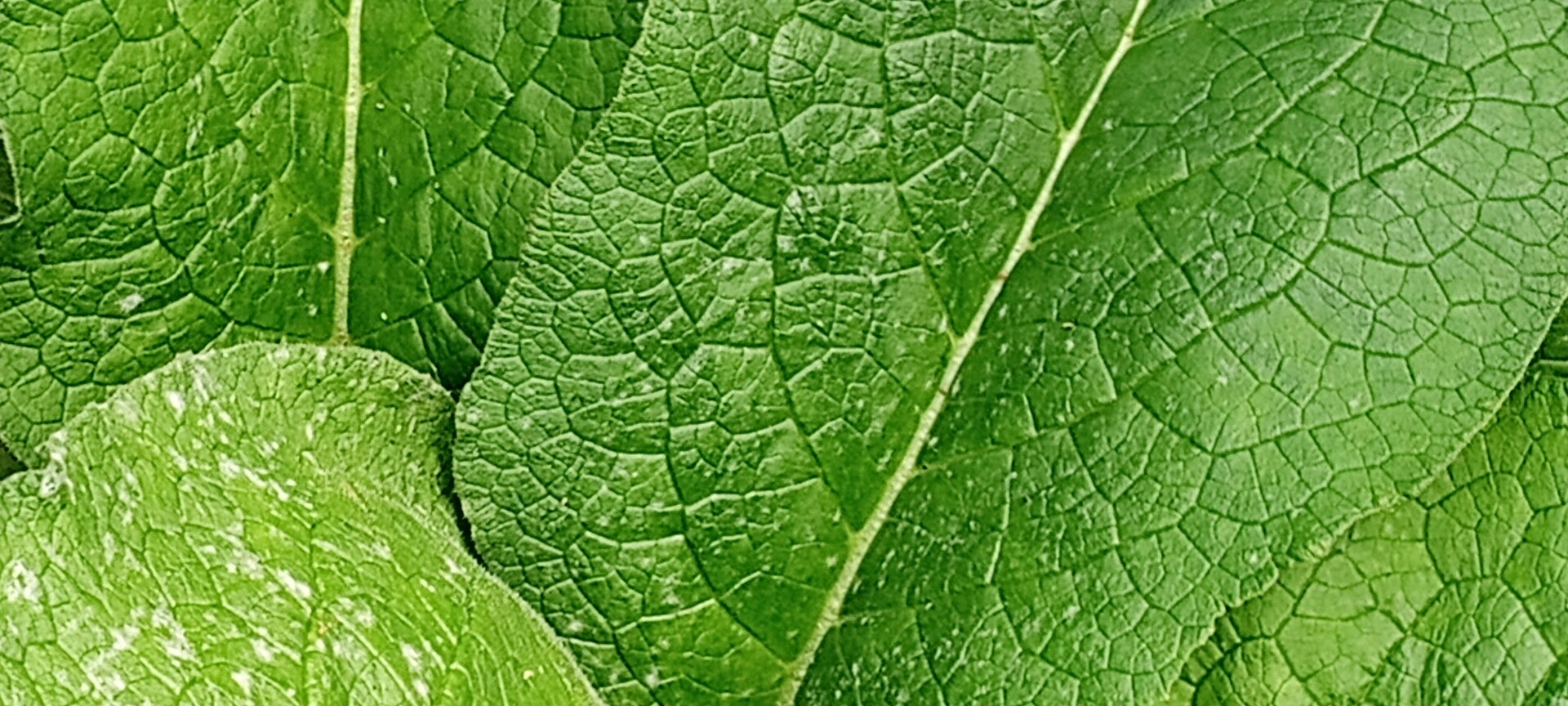
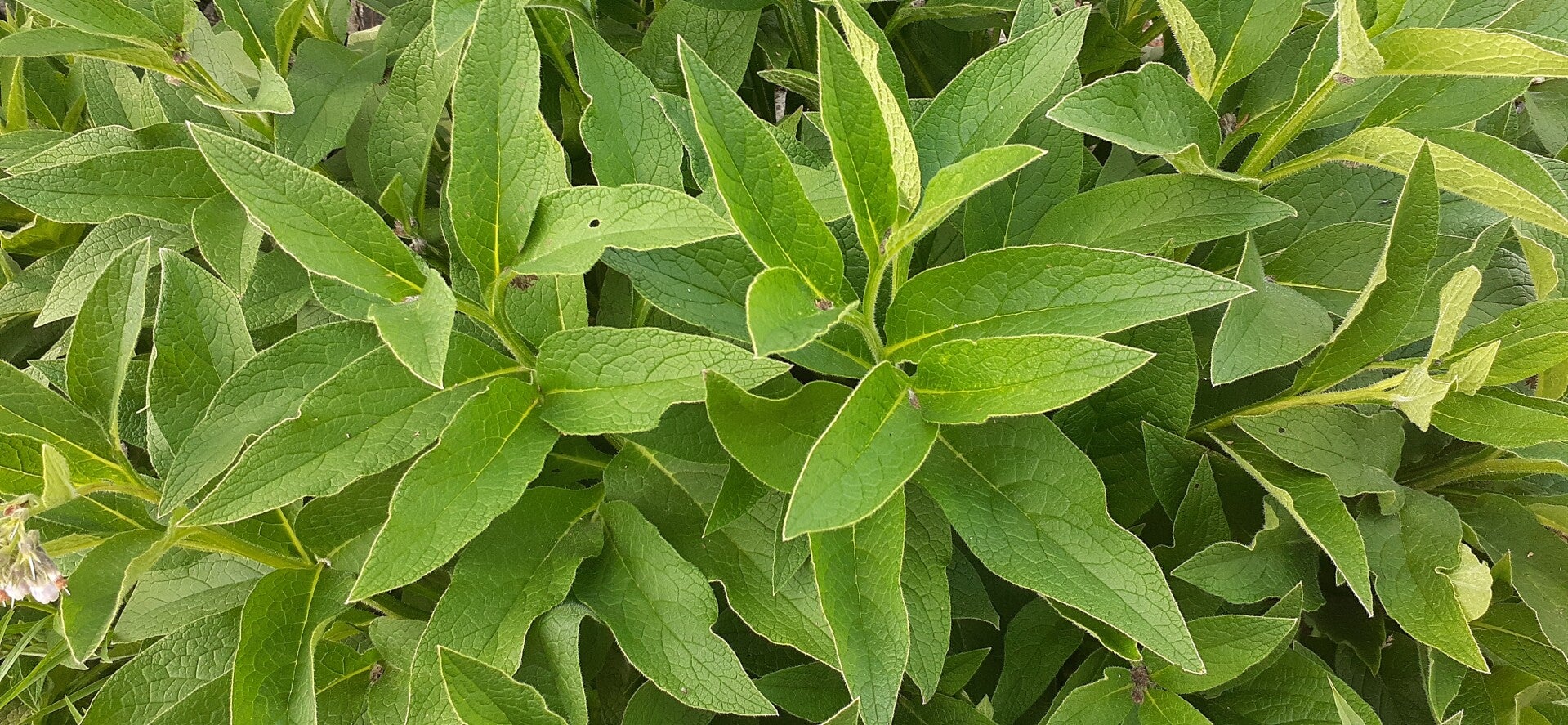
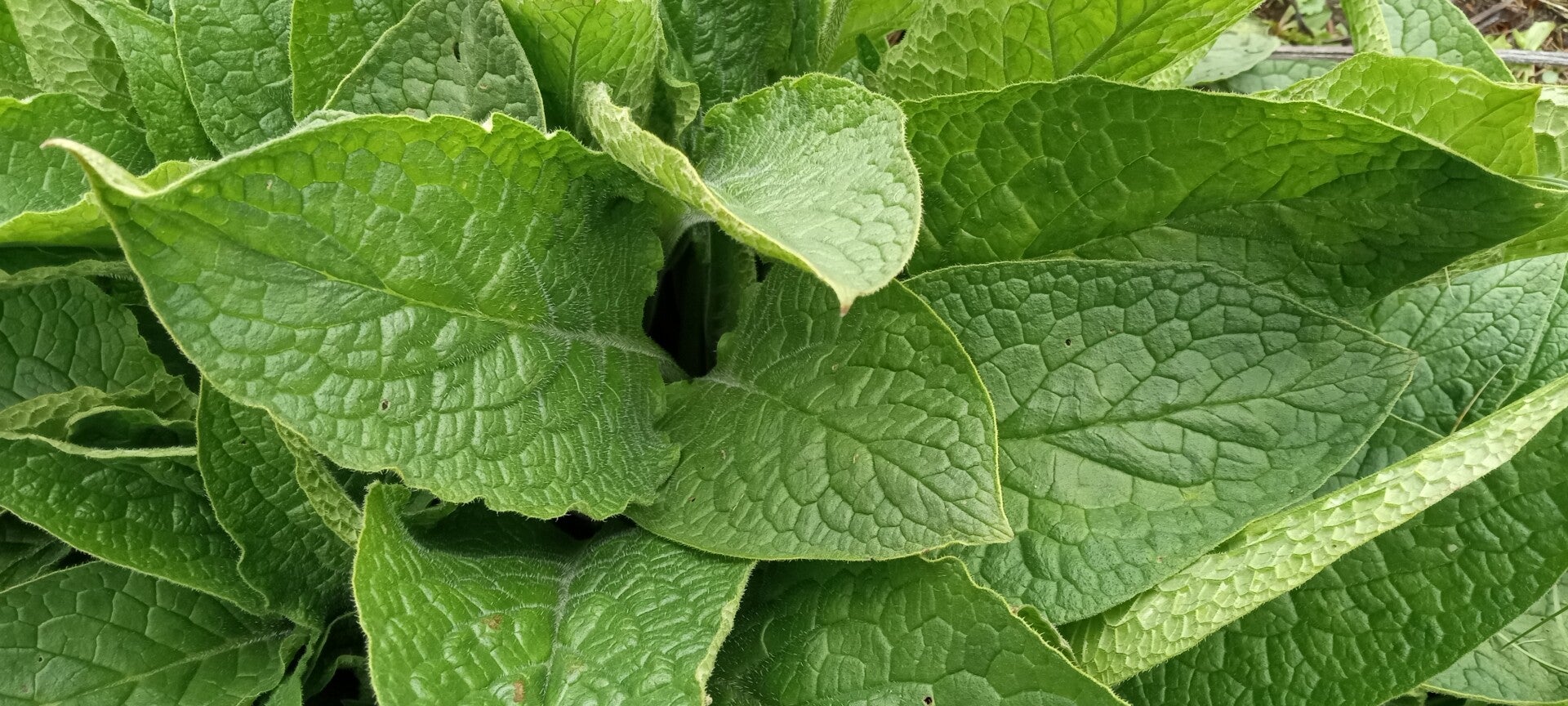
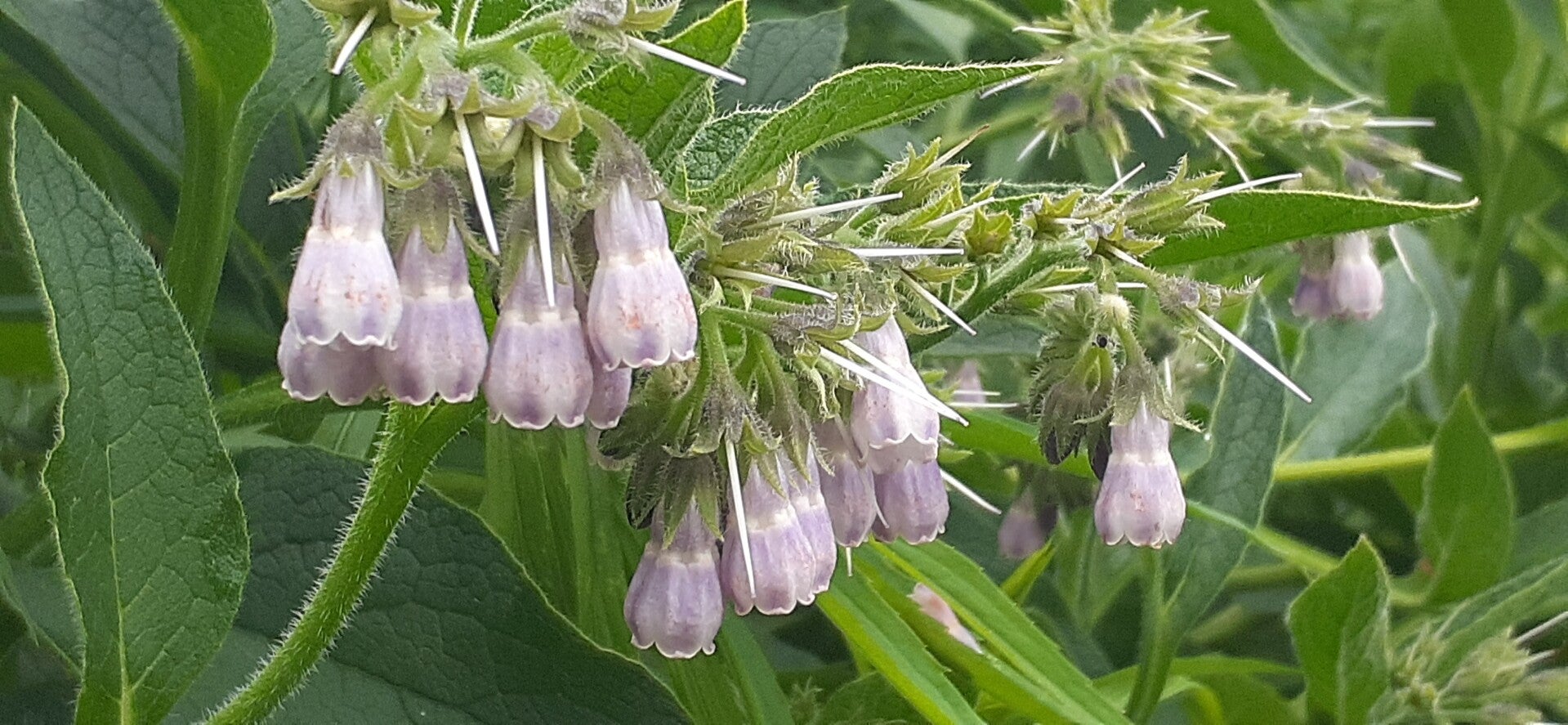
Comfrey is a a perennial herb from the borage family. There are any where from 30 to 59 species of Comfrey, this number varies by source. Within the species there are The Comfrey that grows at Mountain Fables is a sterile hybrid cultivar of Comfrey, also known as Bocking 14. It spreads by root, not by seed. It has lavender flowers, pointed leaves, slender stems the color range is a variety of deep greens..
For generations Comfrey has been gathered and valued by many cultures for its distinctive botanical qualities. Its long history reflects the knowledge and resourcefulness of people who have worked closely with the plants growing around them. Today, Comfrey continues to be appreciated as a natural botanical material for traditional and modern crafting and art.
Comfrey At A Glance👀



GROWING THE COMFREY
Mountain Fables Dried Comfrey is wildcrafted. It is carefully hand gathered from the fields, woodland edges and from the outer yard of my yard in Central NY State, USA. No synthetic or organic fertilizers or pesticides are used. Just Mother Nature doing her thing! It is a raw, unrefined. responsibly sourced, harvested and dried product perfect for crafting and art projects.
HARVESTING THE COMFREY
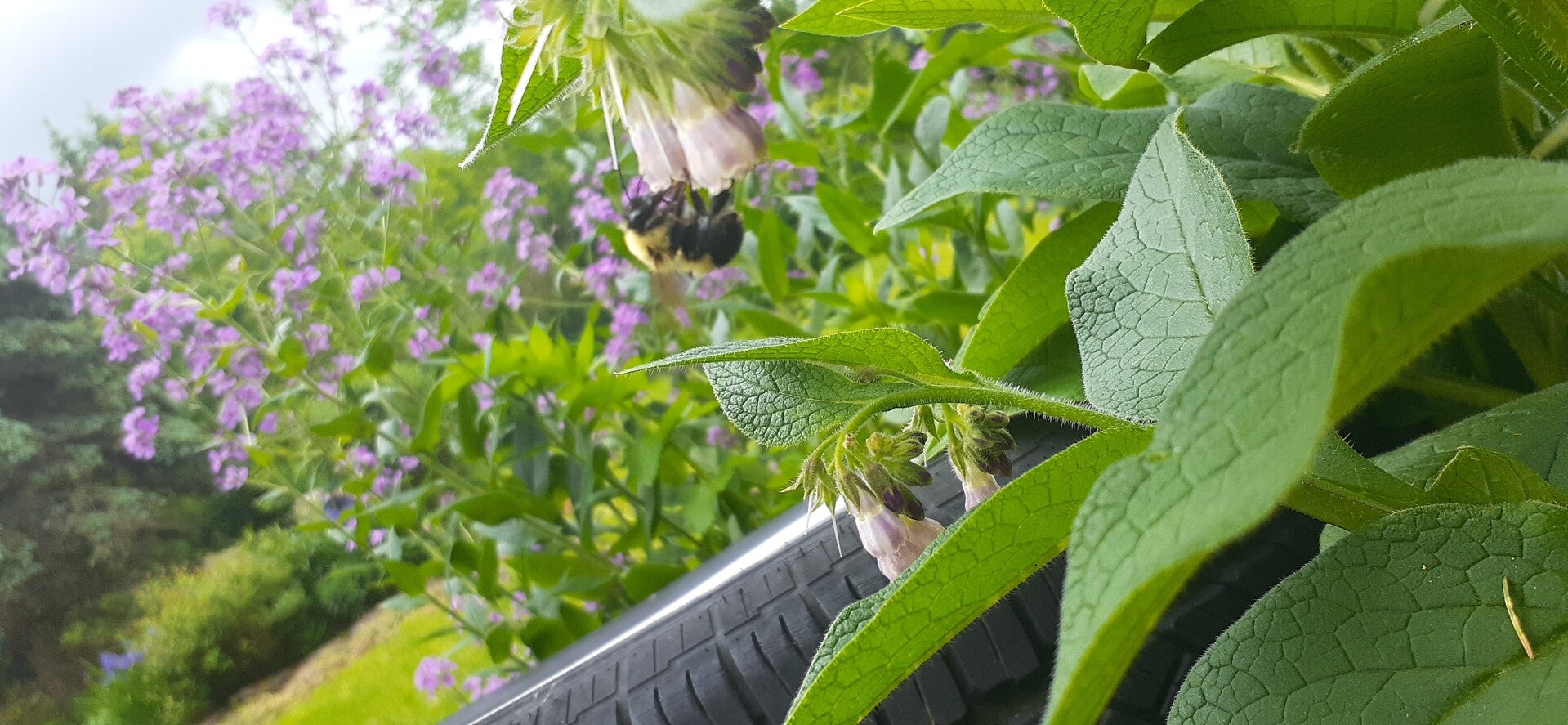
When it is time to harvest a crop for drying, all care is taken to ensure pollinators, who love Comfrey when its flowers are in bloom, are not disturbed. The Comfrey is cut when the flowers are at the end cycle of their bloom.
The first bloom of the season is the most exciting. The bees show up in droves from early morning until dusk busily collecting the nectar.


Can you tell I love taking pictures of the bees when the Comfrey is in full bloom? Not only do I love watching them and taking pictures, I also love hearing them. There's a steady, pleasant humming or drone as they spend the day moving from flower to flower, busily shopping for and collecting their fleeting prize. Two nick names which I have given Comfrey are "Bumblebee Shopping Plaza" and "The Bumblebee Store". Watching them one can tell that this is truly a shopping trip that the bees enjoy! They are working hard but they look very happy and content. Perhaps even frenzied with excitement because of the abundance of fresh blooms! But I'm not a bee, so who knows? They look happy to me though!

THOUGHTFUL HARVEST
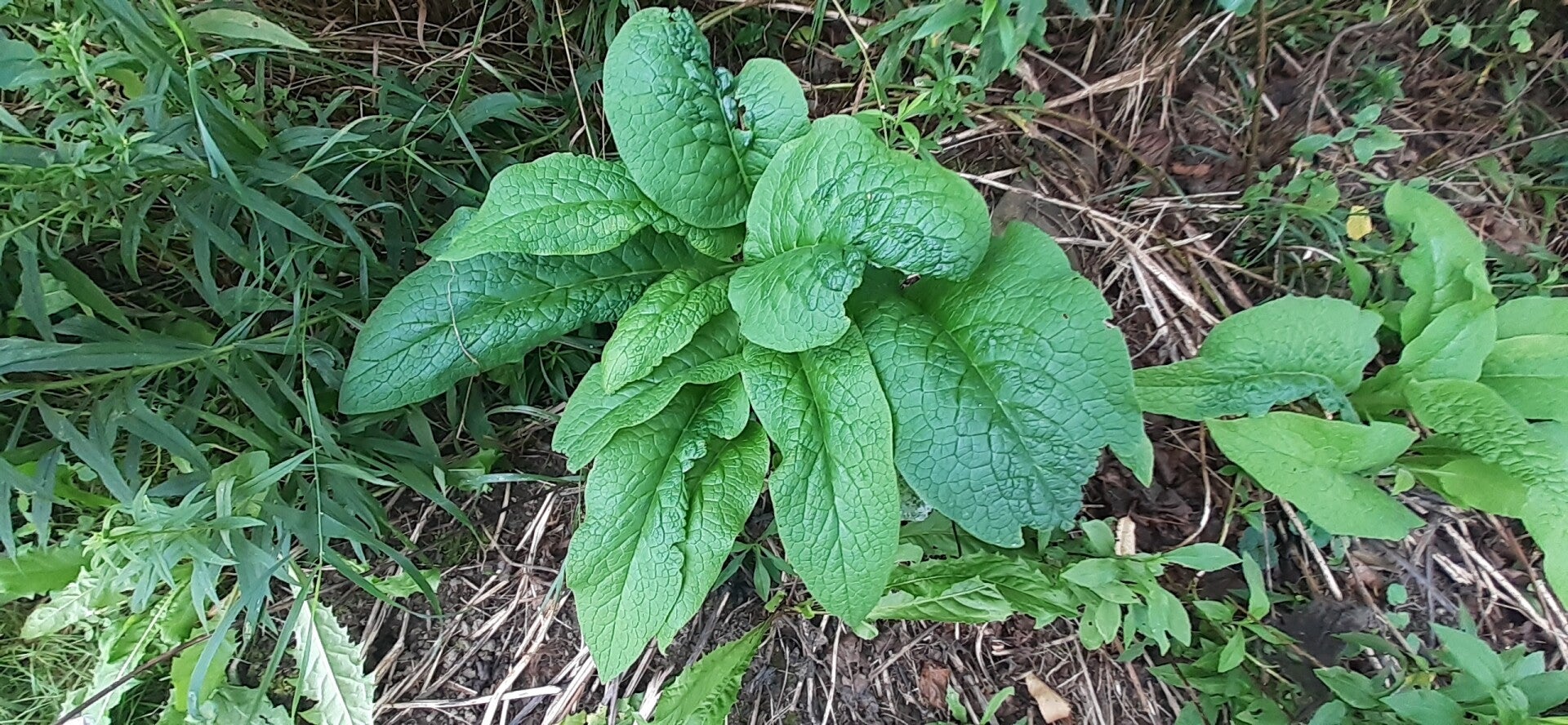
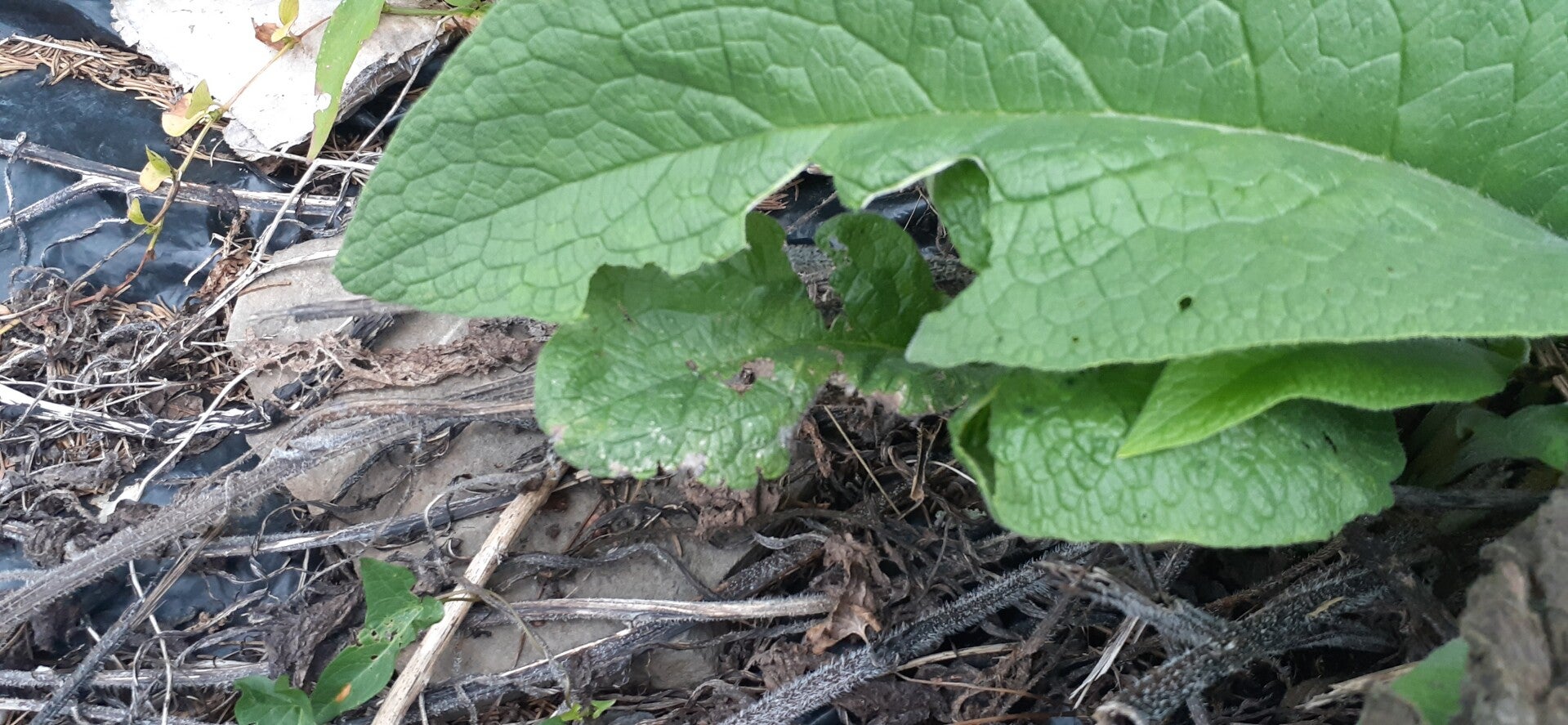
When cutting Comfrey for harvest the bees are not our only consideration. We leave some choice leaves for our neighborhood foragers... wild rabbits, groundhogs - also slugs! They all love to nibble on the leaves.
DRYING THE COMFREY
When the flowers have died down the Comfrey is cut before it droops and falls to the ground. It is actually healthier for the plant to be cut back when the flowers die down. Cutting allows the plant to put all its energy and resources into producing the growth of new leaves. It also allows the new growth to get more sun.
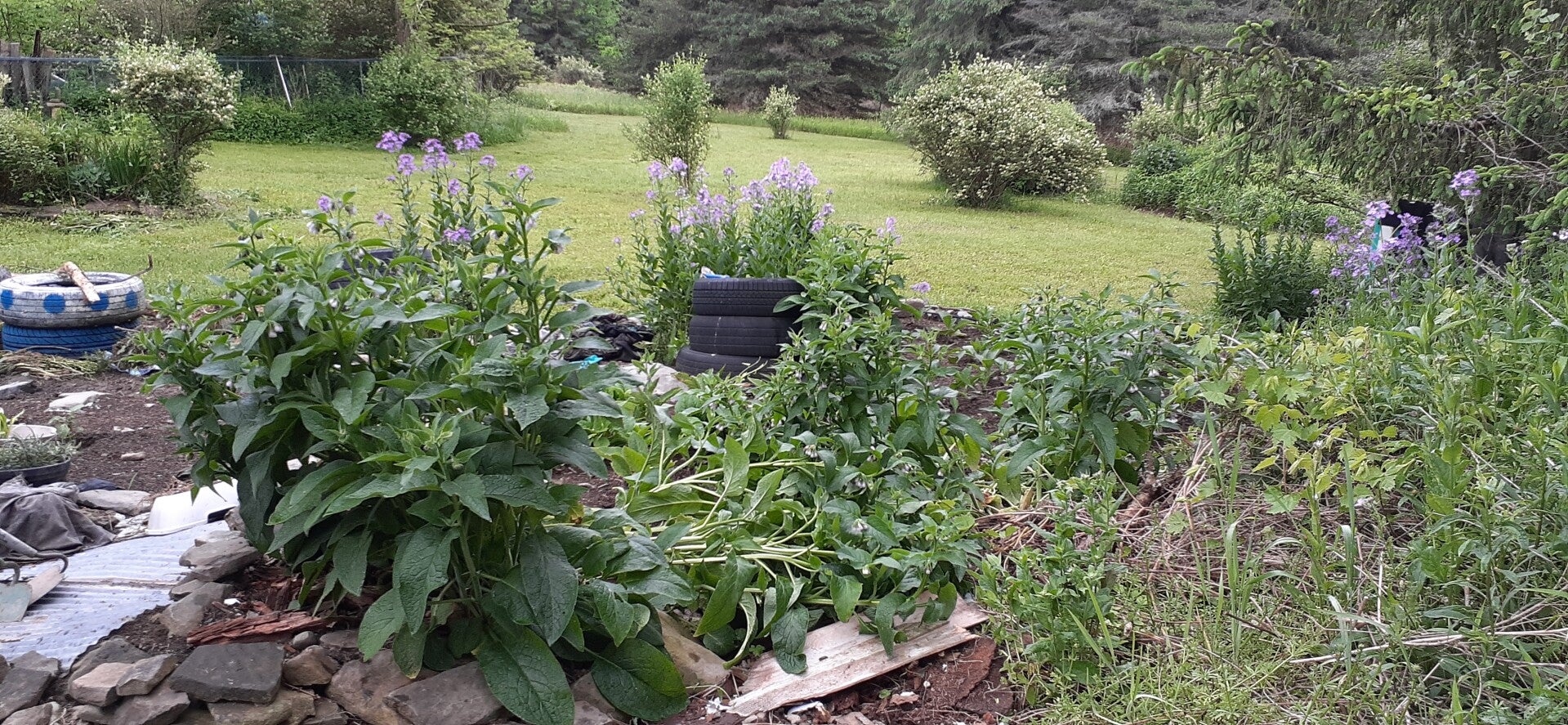

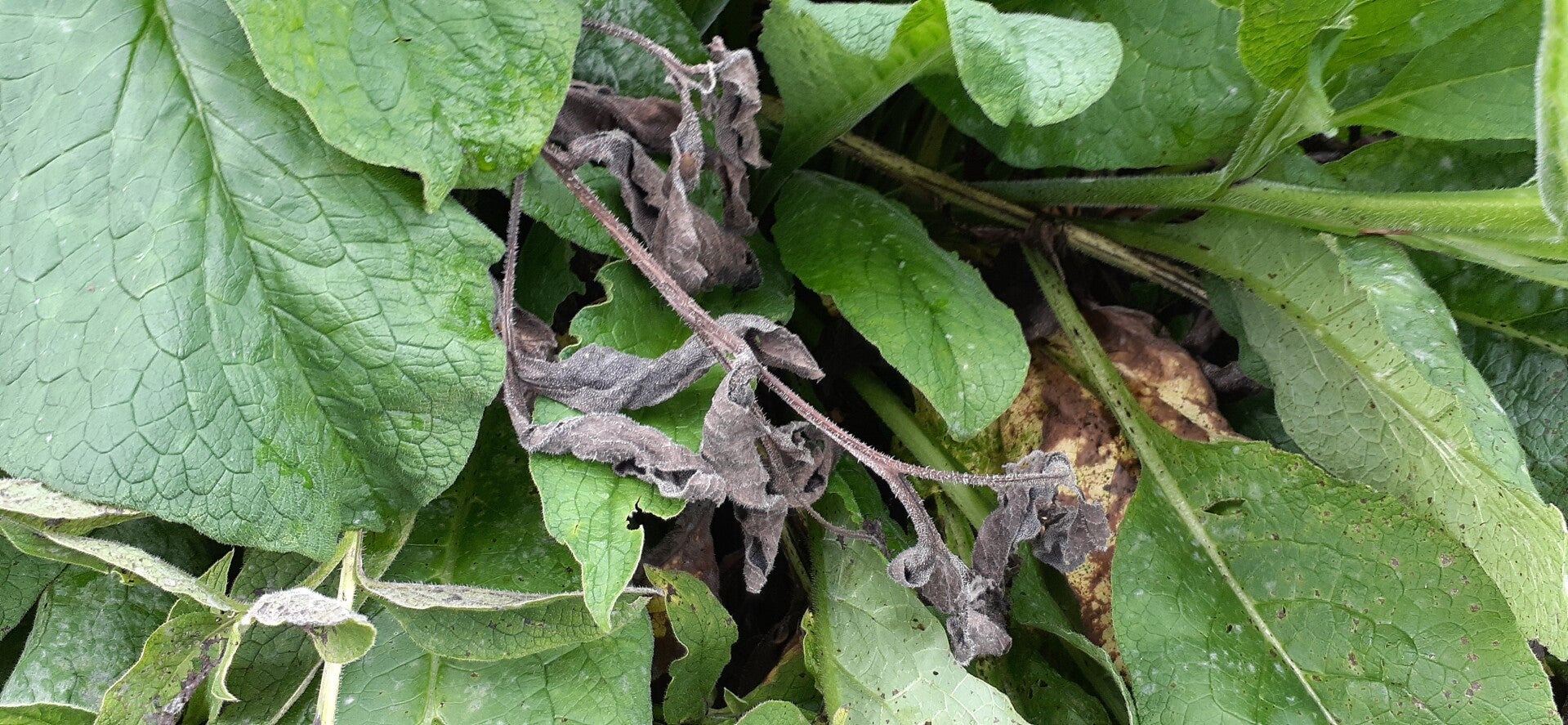
The dead flowers and the big leaves become very heavy and the stems can't support their weight - so they droop, as seen above. An added bonus to cutting the Comfrey is that aesthetically it keeps the bedding area clean and fresh looking. It also saves nearby plants from being smothered and choked out when the Comfrey stems become too heavy and fall on top of them.
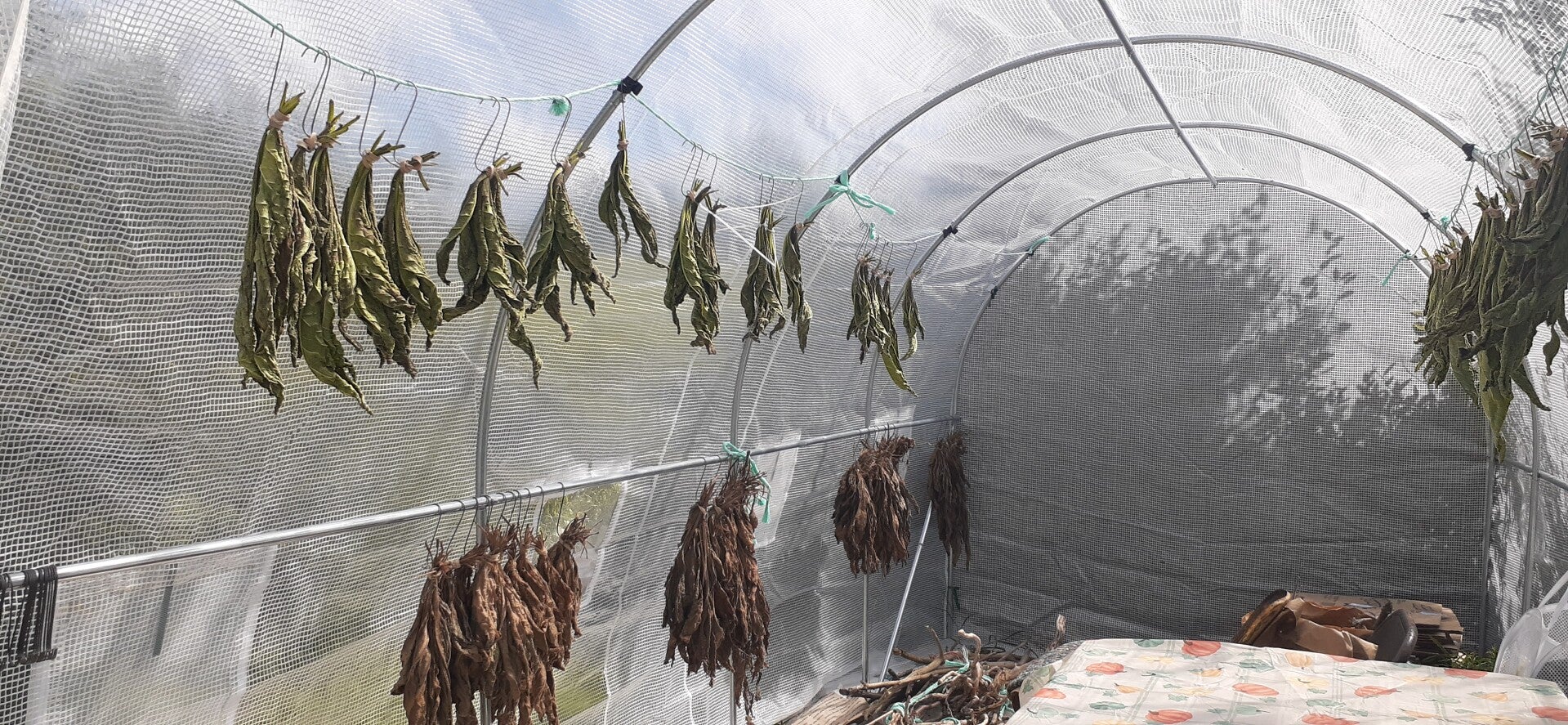
The Comfrey is cut once the flowers die down, tied into small bundles and hung in the greenhouse until totally dry. Drying time depends on the weather conditions, hot, sunny days help speed things up!
GREENHOUSE DRYING

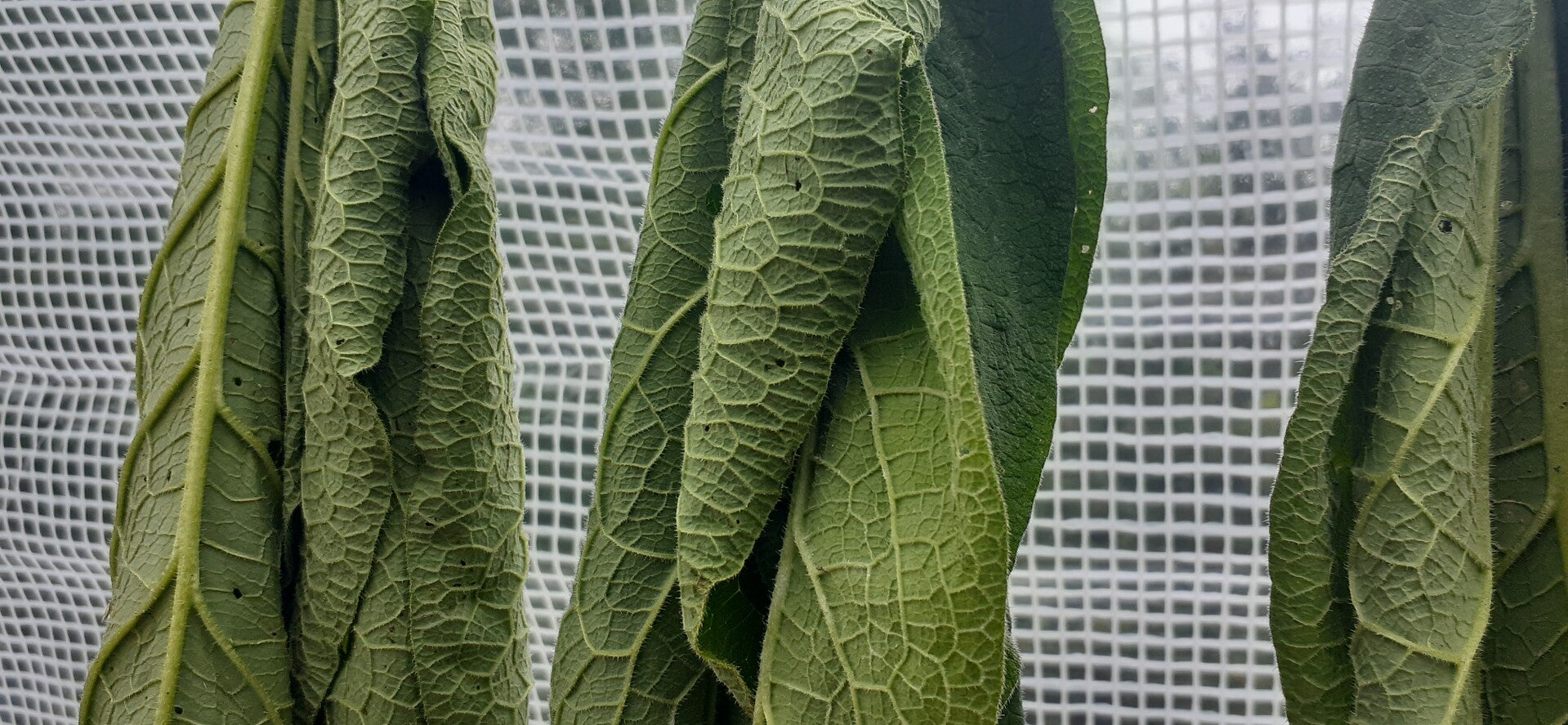
DRIED COMFREY COLOR PALETTE
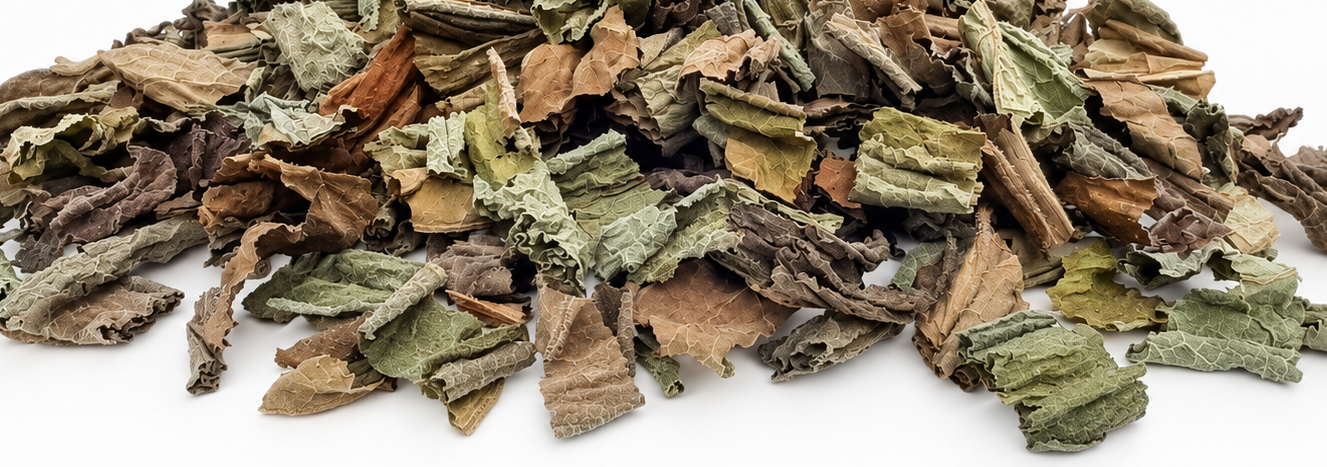
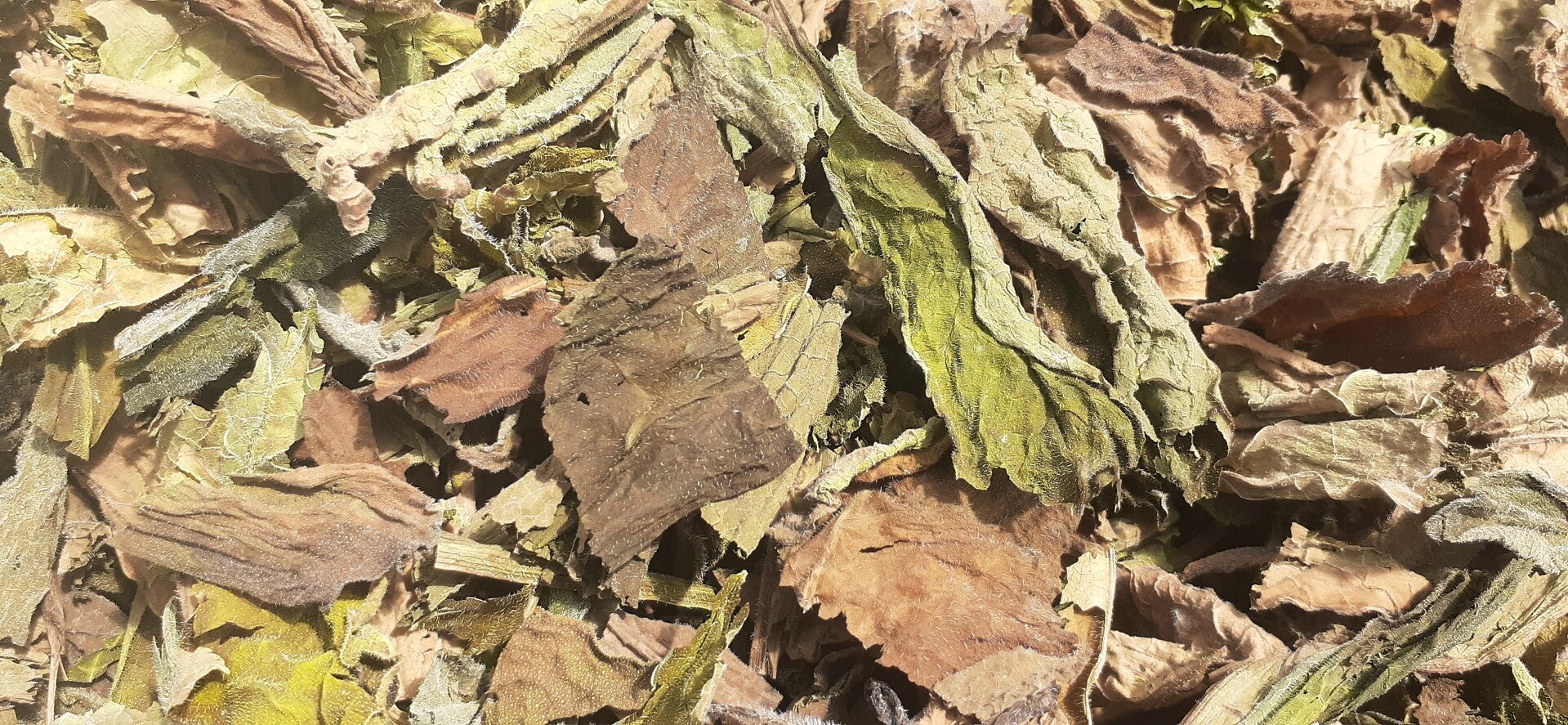
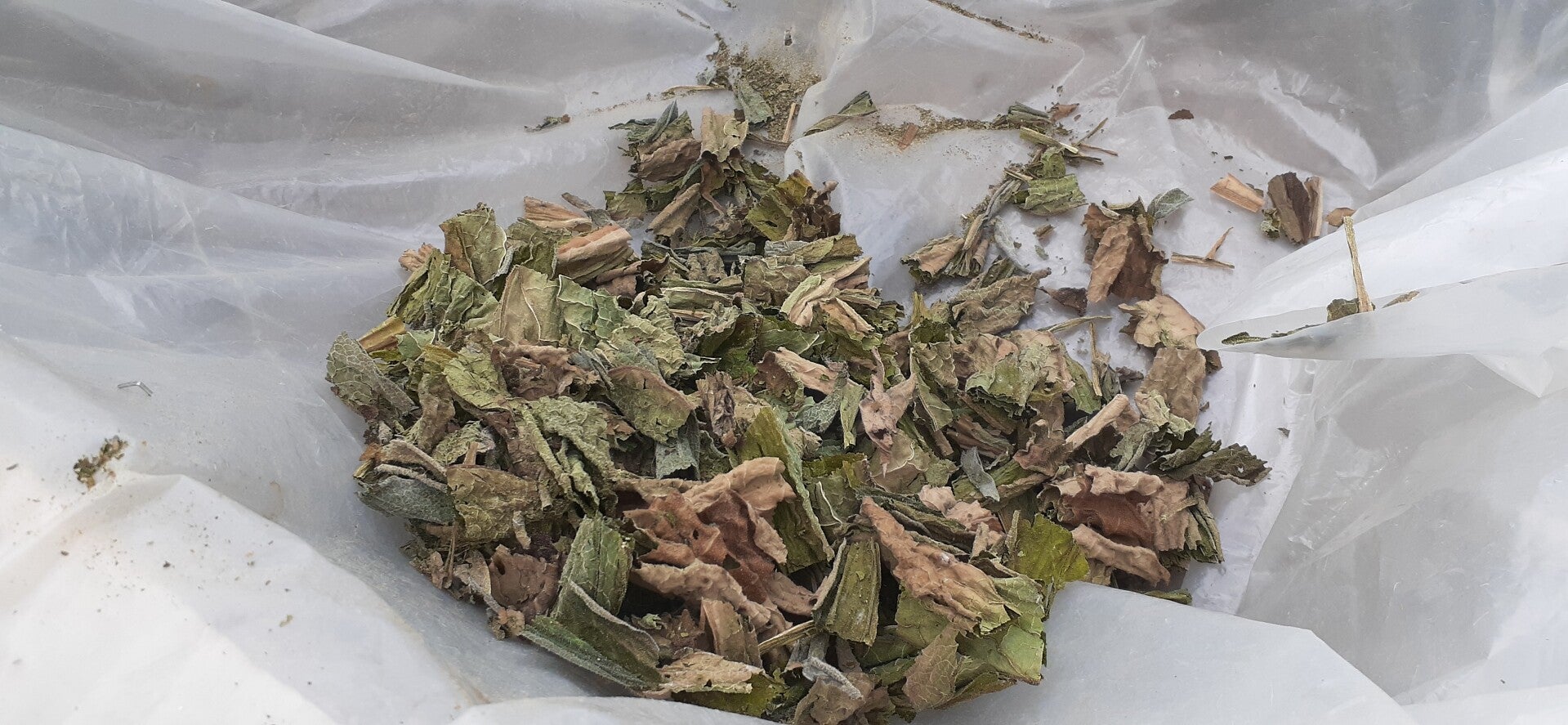
Dried Comfrey leaves vary in color. Drying method and weather factors have a direct impact on the shades of colors that are produced when the Comfrey is dried. Often, the leaves on the outside of the bunch tend to brown while the inner leaves retain more green.
SHADES OF DRIED COMFREY
Individual Flat Drying
For the most pure green, flat shaped leaves, the leaves must be dried by laying each individual leaf out flat in a dry environment until it finishes drying. They cannot be overlapped. This technique is efficient when there is a small quantity to be dried. This method is very good for individuals who are processing and storing their Comfrey for personal use. This drying method is usually done indoors on a flat surface. It may be done outdoors if weather is agreeable for a long enough period. Mountain Fables processes such a large volume that this method would not be practical.
Dehydrating Equipment
Using a dehydrator is another method of drying small "greener" quantities. Dehydration of large quantities is possible, but the equipment, equipment space, electricity and man power required is expensive.
Hang Drying
Processing the Comfrey by "hang-drying" is a more efficient and cost effective method for Mountain Fables. Hang- drying not only produces a product comparable to Comfrey dried in its natural habitat, it also respects the environment by reducing energy consumption, as it eliminates the need for electricity. No electricity, no bulky dehydration equipment, no extra space required to house the equipment and no additional manpower to operate it. By using the hang-drying method production costs are dramatically reduced, while remaining environmentally friendly and preserving product quality. The result? The savings are passed on and are reflected in exceptionally great bulk prices for you.
At Mountain Fables the Comfrey is hung to dry naturally in a greenhouse. Tones often vary in hue and intensity. Depending on drying conditions the coloring may range from: deep brown, muted shades of a lighter brown, a brownish or yellowish green, to a more pure army-olive green.
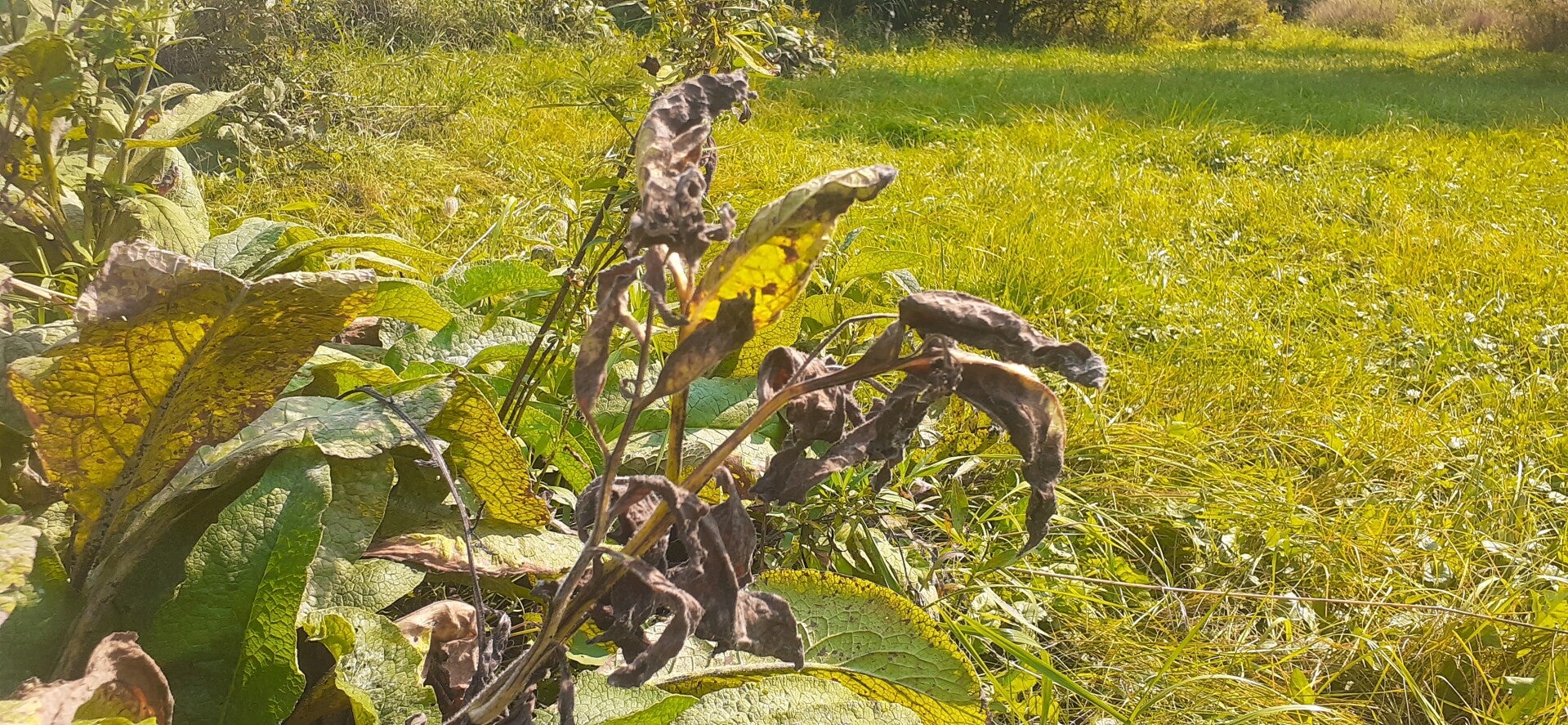
Each harvest presents its own color palette. Even within the same harvest there is color variation. Each bunch of leaves usually produces its own varying array of color. (1) The first picture shows natural drying in the field while the stem is still on the live plant. Stems dried on the live plant tend to take on a deeper brown with a grayish-black color. (2) The pictures that follow show the Mountain Fables hung-dry Comfrey's varying shades and tone possibilities.
(Photos By JKA - No AI)
(1) Comfrey drying naturally in the field on a live plant.
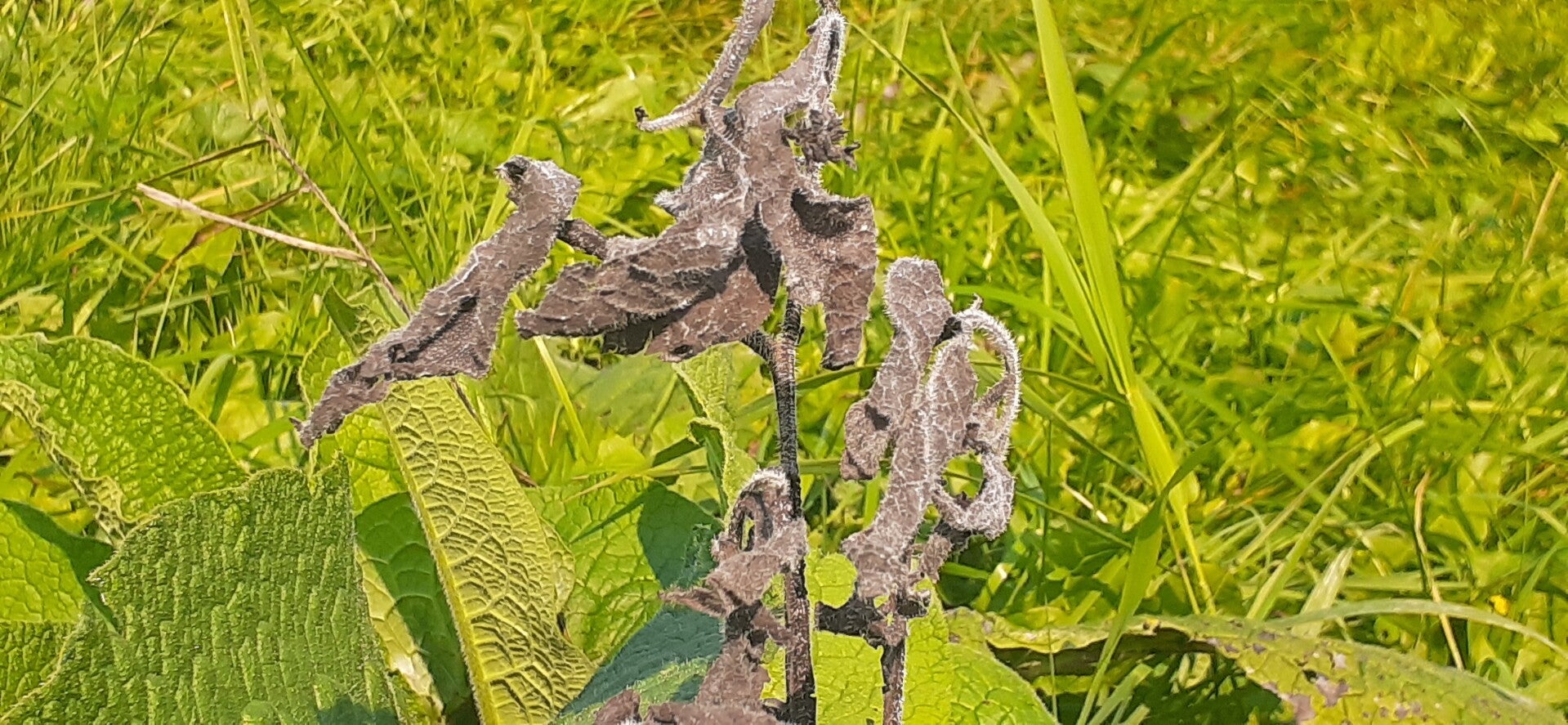
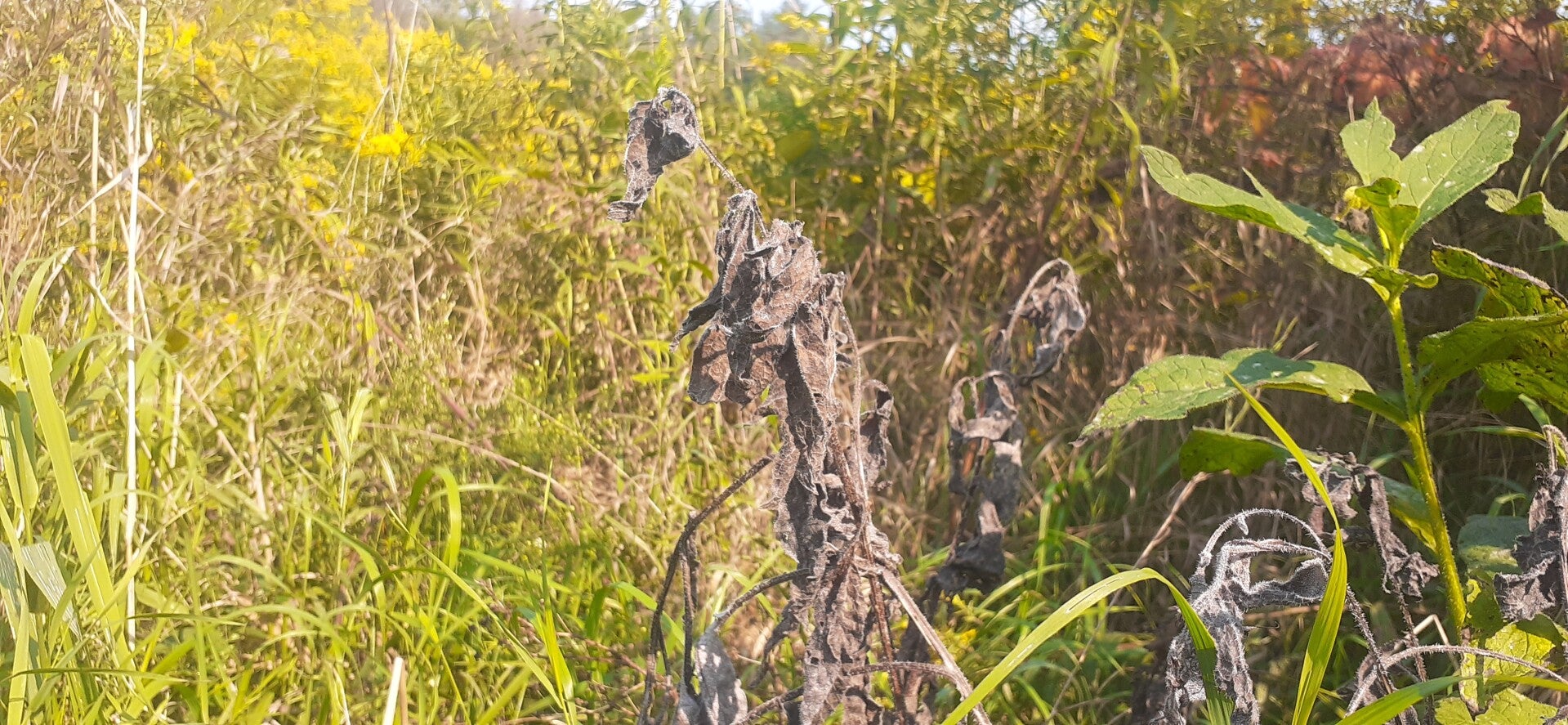
(2) Mountain Fables Greenhouse Dried color ranges.


The leaves are hung until thoroughly dry. If there is any moisture present the Comfrey will mold and rot when stored. Once thoroughly dry the plant is ready for packaging.
THE FINAL STEP
INSIDE THE PACKAGE
Packaging is the final step in delivering our Dried Crafting, Comfrey to you. Once the Comfrey leaves and upper stems have dried, they are "rough cut", by hand into uneven pieces, and packaged. The Comfrey is very dry and some leaves may crumble when packed. Any crumbled leaf will settle at the bottom of the packaging bag and creating some a small amount of leaf crumble and leaf power.
PACKAGE SIZE
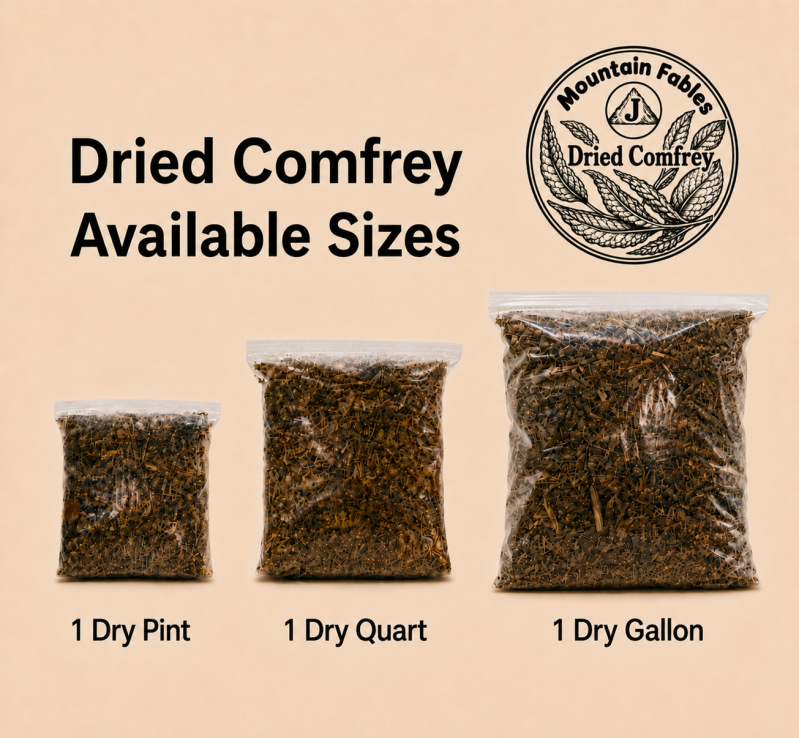
After cutting, the Comfrey is packaged in slider storage bags and sold as a bulk crafting supply. Bags are not weighed, rather, each bag is filled by volume and sold as a Dry Volume unit. Each bag is carefully hand-packed and generously filled.
Available sizes:
- Gallon
- Quart
- Pint
- Slider bags are used for your ease of use and for freshness. For long term storage split the contents and transfer to air tight jars or re-pack into several new, sturdy slider bags. By splitting the order into multiple bags or containers you can use the amount needed and cut down on oxygen exposure. This will help keeping the unused portion of Comfrey fresh.
- Dried Comfrey has a long shelf life as long as it is not exposed to moisture and is placed in an area that is dark or has a minimum of light.
RAW, UNREFINED, CRAFT PLANTAE USES
Mountain Fables loves supporting the creative community by providing quality plantae at affordable prices, in quantities that accommodate both large and multiple crafting projects. Our products consist of dried, raw, unrefined Plantae and are strictly for use in general, non-ingestive crafting or display projects.
Because we do not process or market our Plantae products for any single application, we do not provide specific project instructions. Instead, we encourage you to explore the internet, where you will find many wonderful artisan forums, crafting blogs, and tutorial videos that can guide you through relevant information for the specific project you wish to create.
RESTING COMFREY
Once the season is over we all rest. I move on to other projects and whims. The Comfrey also takes a well deserved break, preparing itself to thrive in the coming spring, when its growth cycle will start all over.
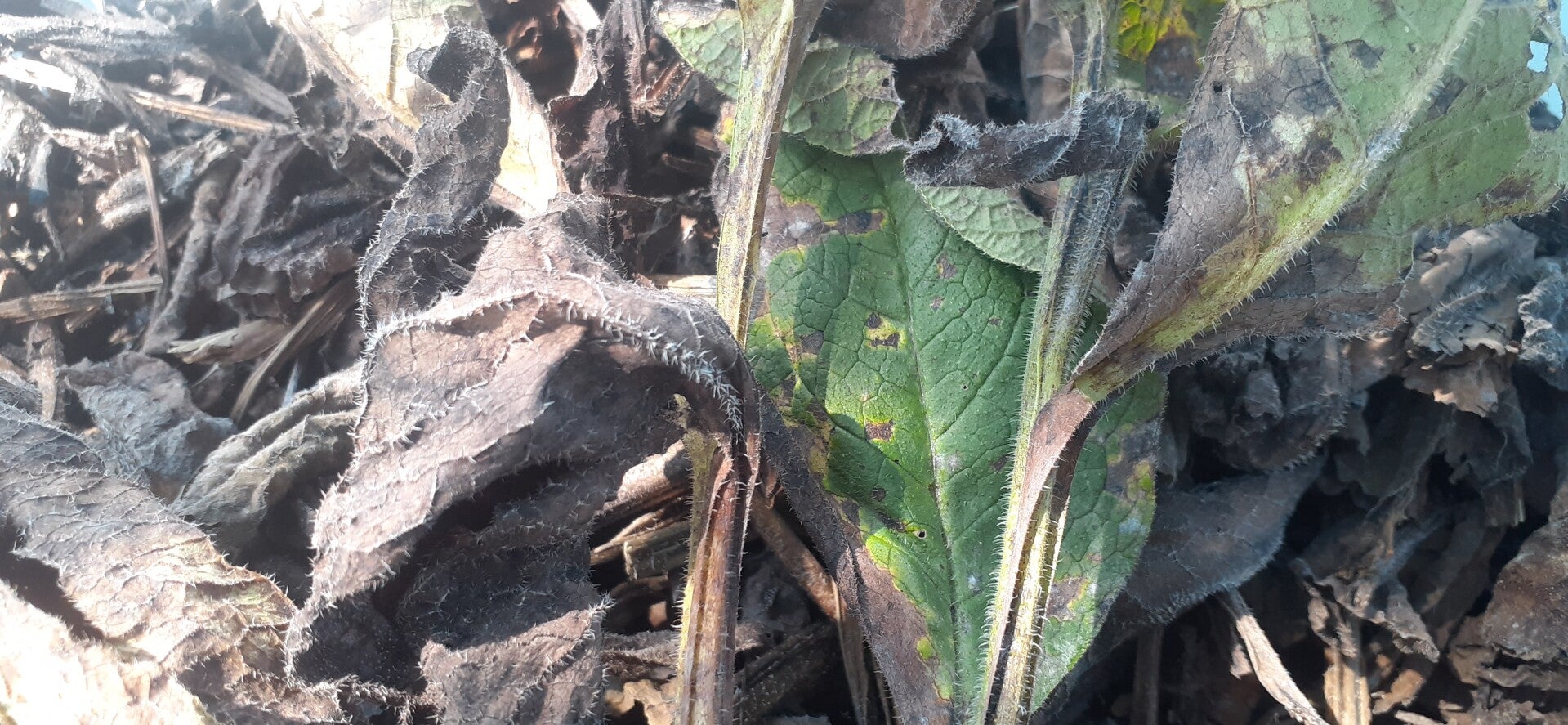
The final growth of the season is left to wilt in place for a winter slumber. By spring, last seasons brown leaves and stems lay on the ground beside the new, vibrantly green, emerging Comfrey shoots.
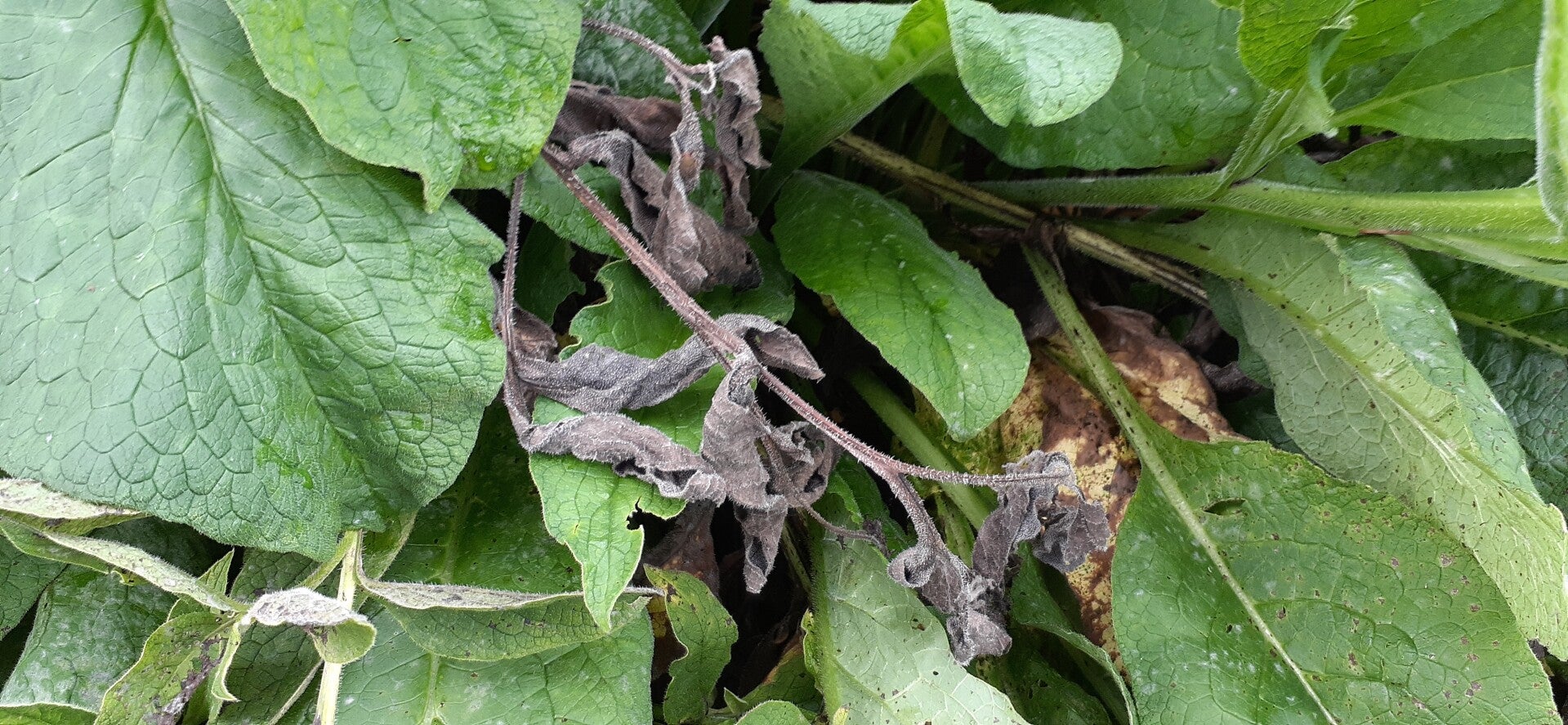


At the end of each season the last crop of Comfrey is left in place to droop, drop. wither and dry . The final growth creates a thick winter blanket for the Comfrey plant roots and also provides a winter home for insects that hibernate beneath leaf matter.

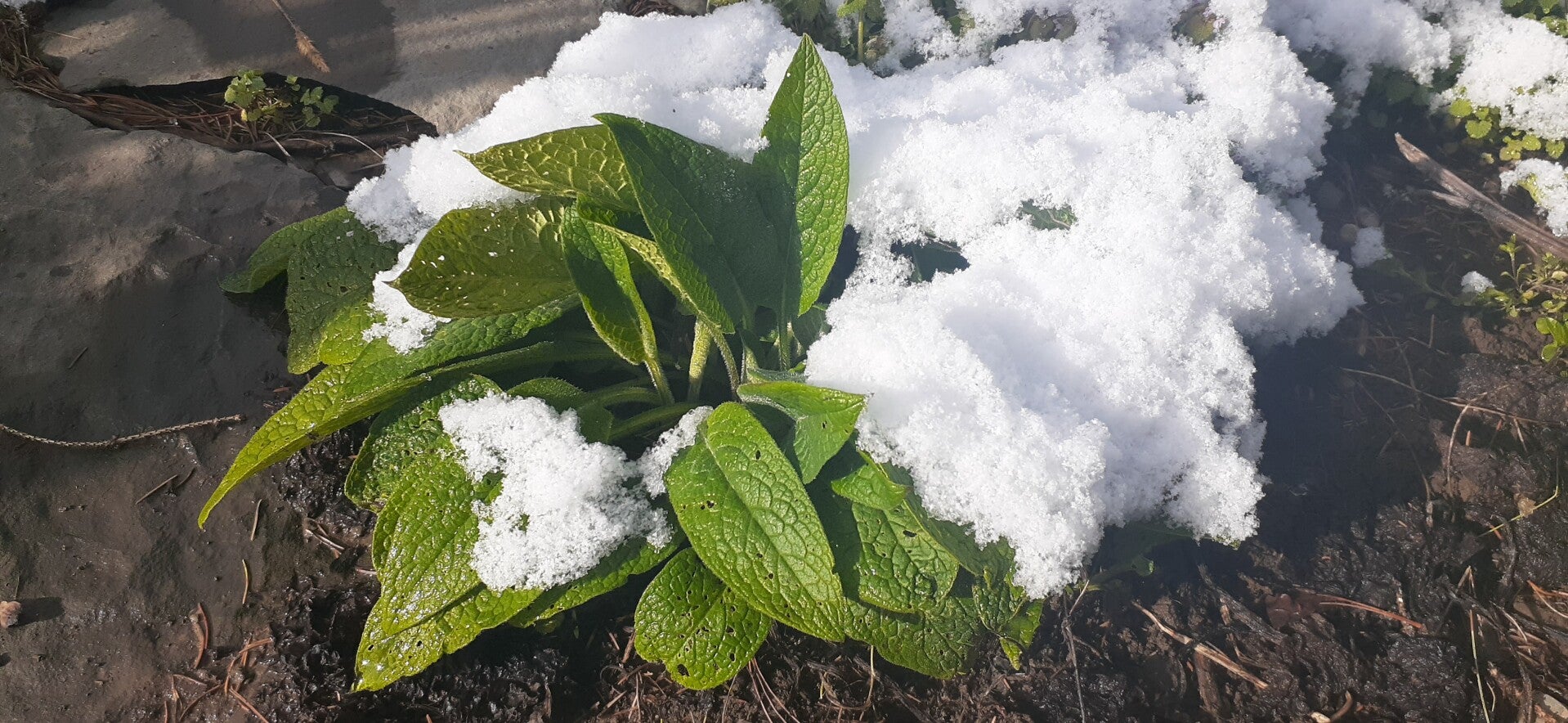

The new spring Comfrey is very hardy. Once it returns it easily survives late spring surprises, like snow showers and occasional overnight temperature drops into the mid and low 20's. From late spring and throughout the summer it is hard at work providing blooms for the pollinators and snacks for other wildlife. Then...
From late fall to early spring Comfrey takes some time off...
Even Comfrey needs a break!
"AKA"..... A bit of Comfrey "me time".
