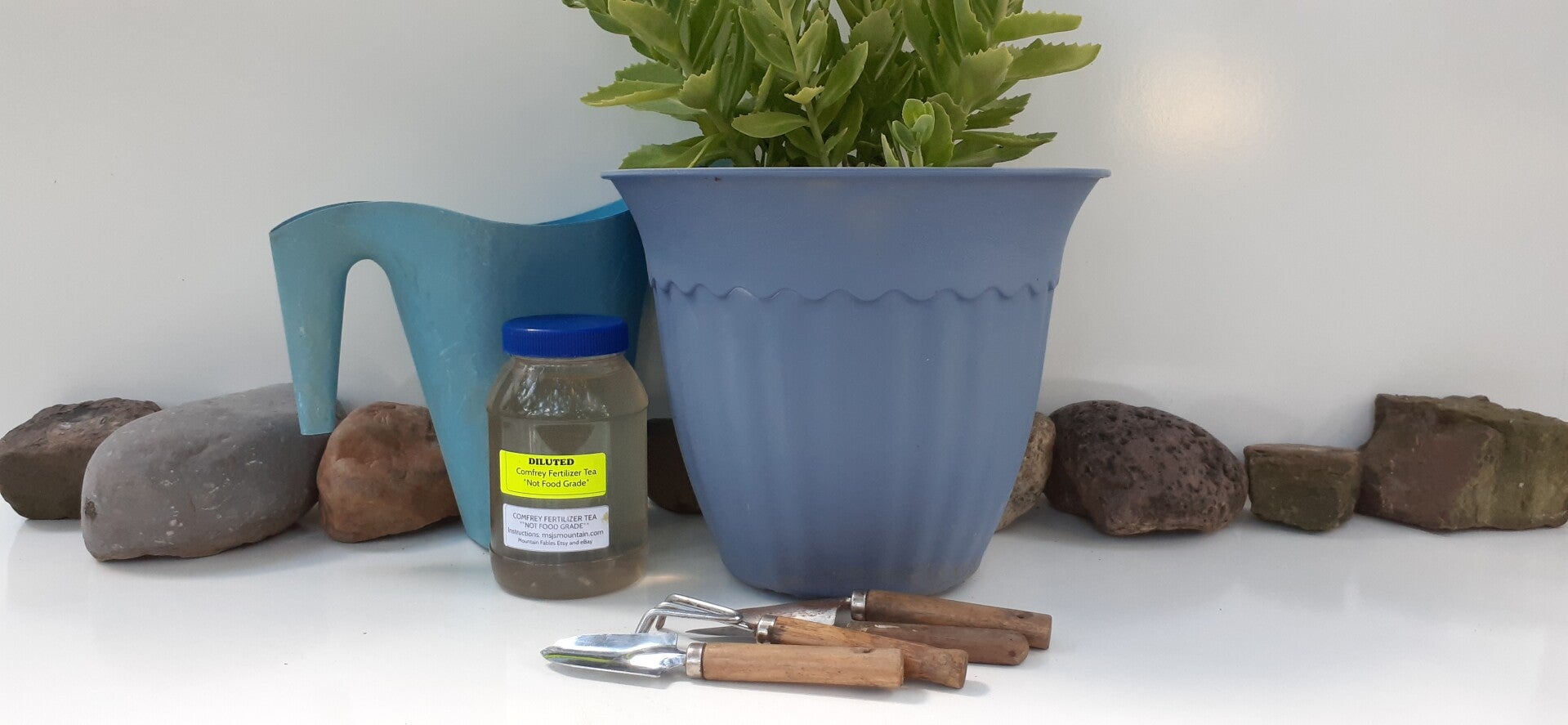






At A Glance👀
Below you will find the Quick Versions of how to make the "Tea"
- The Quick Version gives a concise, straight to the point set of instructions. No frills. No extras.
- The Detailed with Hints Version provides more thorough explanations, complete with helpful tips and insights.
- Both instructions will produce the desired result... Comfrey Infused Water for use as:
- Plant Food or Body Soak. (See Introduction for more information on uses.)
Three Simple Steps = DSD
- (D) = DECOMPOSE: This step brakes down the plant matter and releases the chemical properties within the plant structure into a base liquid, also called a solvent or a menstruum.
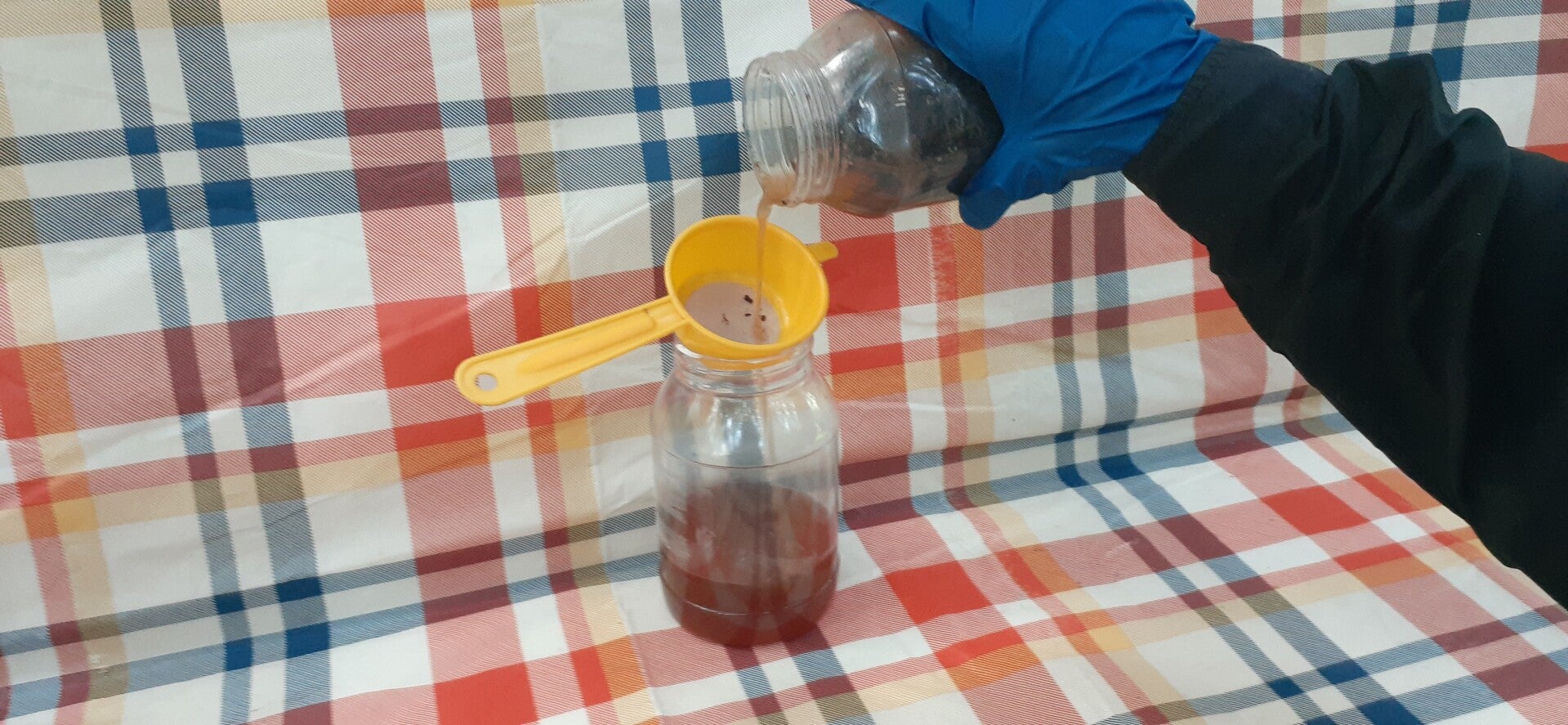
- (S) = STRAIN: This step separates the infused base liquid from the broken down plant matter creating a "Pure Uncut" liquid.
- (D) = DILUTE: This step adds water to the infused liquid and weakens the strength of the Pure Uncut fertilizer.
---------------------------------------------------------------------
- Easy to remember as - DSD These three simple steps are the same whether you are using Dried Comfrey or Fresh Comfrey!

STEP 1: DECOMPOSE:
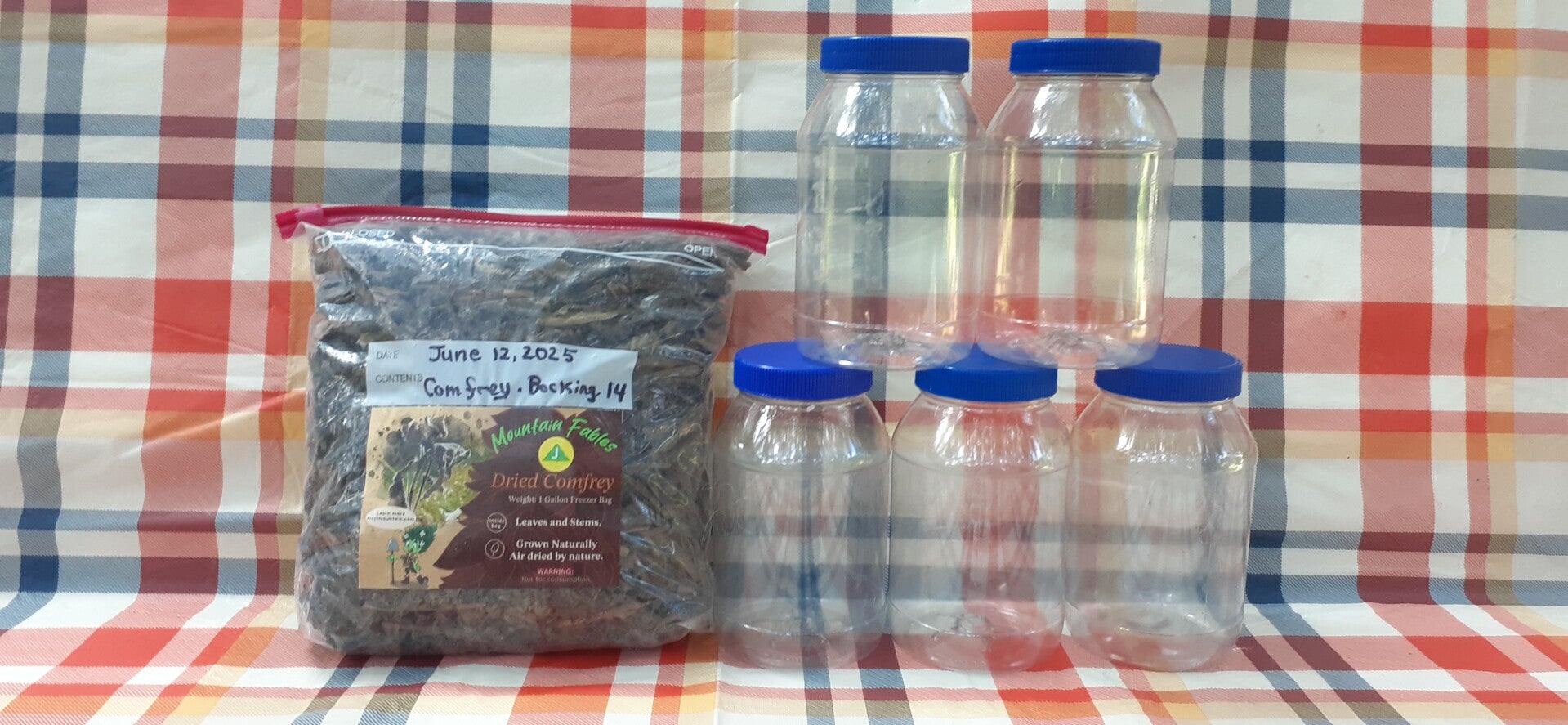
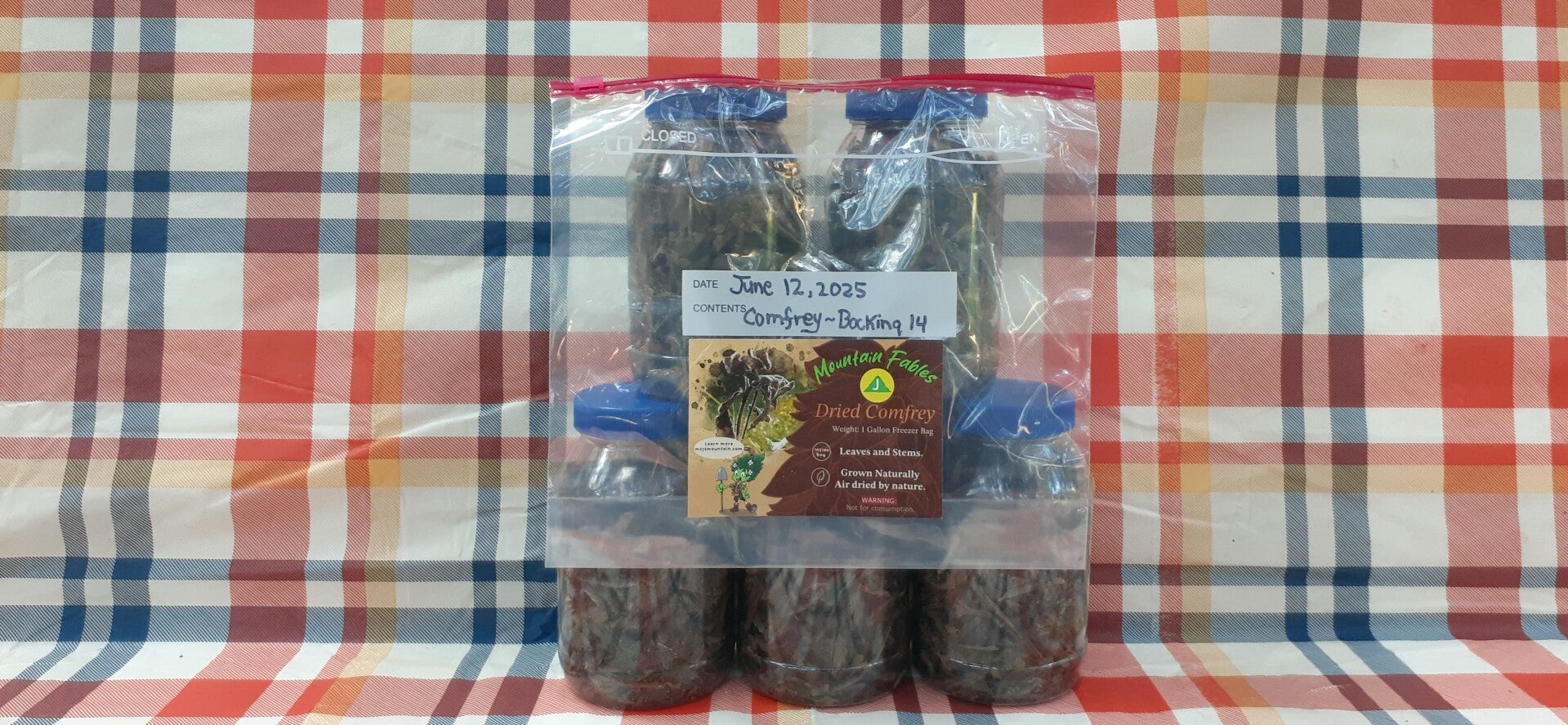
- Choose a Container with lid. A jar with a screw on lid is best.
- Fill with Mountain Fables Dried Comfrey. Place the Dried Comfrey into the container about (3/4) full.
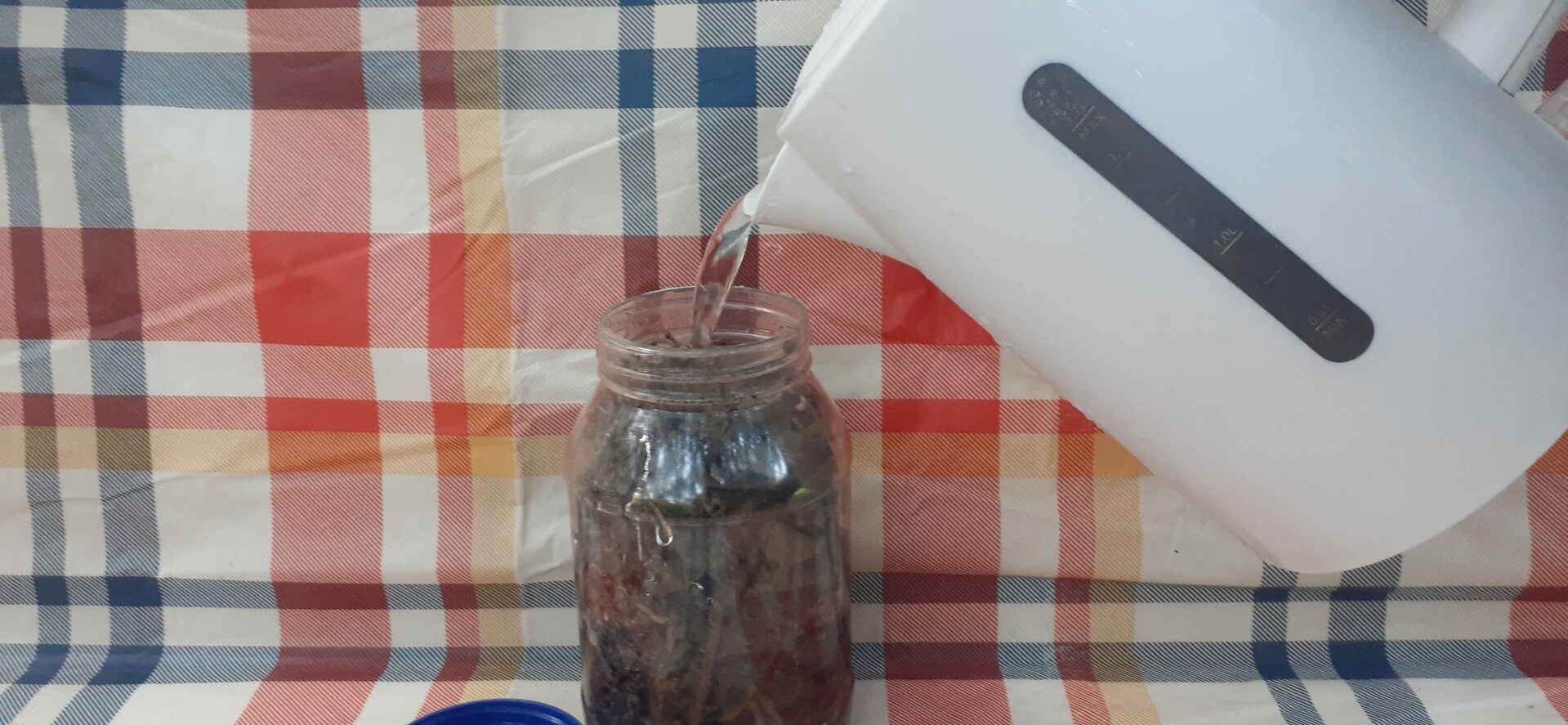
- Add Water. Pour the water over the leaves until they are fully submerged.
- Place the top securely on the jar or bucket so that insects and parasites cannot get in.
- Apply the identification labels. (One status and one white)
- Let the mixture infuse for 2–6 weeks.
- For immediate use of a small amount steep for (30) minutes to overnight.
- The tea will darken and develop the smell of decomposing matter as it brakes down. (Smell and color differ per batch.)
- Proceed to STEP 2: Strain
STEP 2: STRAIN
- After infusing, separate the plant matter from its liquid by straining the liquid off into another container. Reuse the decomposed mater for another batch until water is clear.
- Use spent matter as compost in your garden.
- Apply the identification labels. (One status and one white)
- Proceed to STEP 3: Dilute
STEP 3: DILUTE:
- Dilute the comfrey tea at a ratio of about 1:10 (one part tea to ten parts water). Always dilute.
- You may dilute all at once or as needed.
- Apply the identification labels. (One status and one white).
- It is now ready to apply to your plants.
- Do not put Pure-Uncut Infusion on plants or on your body.
- Do not pour directly on plant roots. It may be used as a mist on leaves (Mist should contain a high ratio of water.)
- Store in a cool or room temperature are.
- Patch test before use. See health details in Introduction