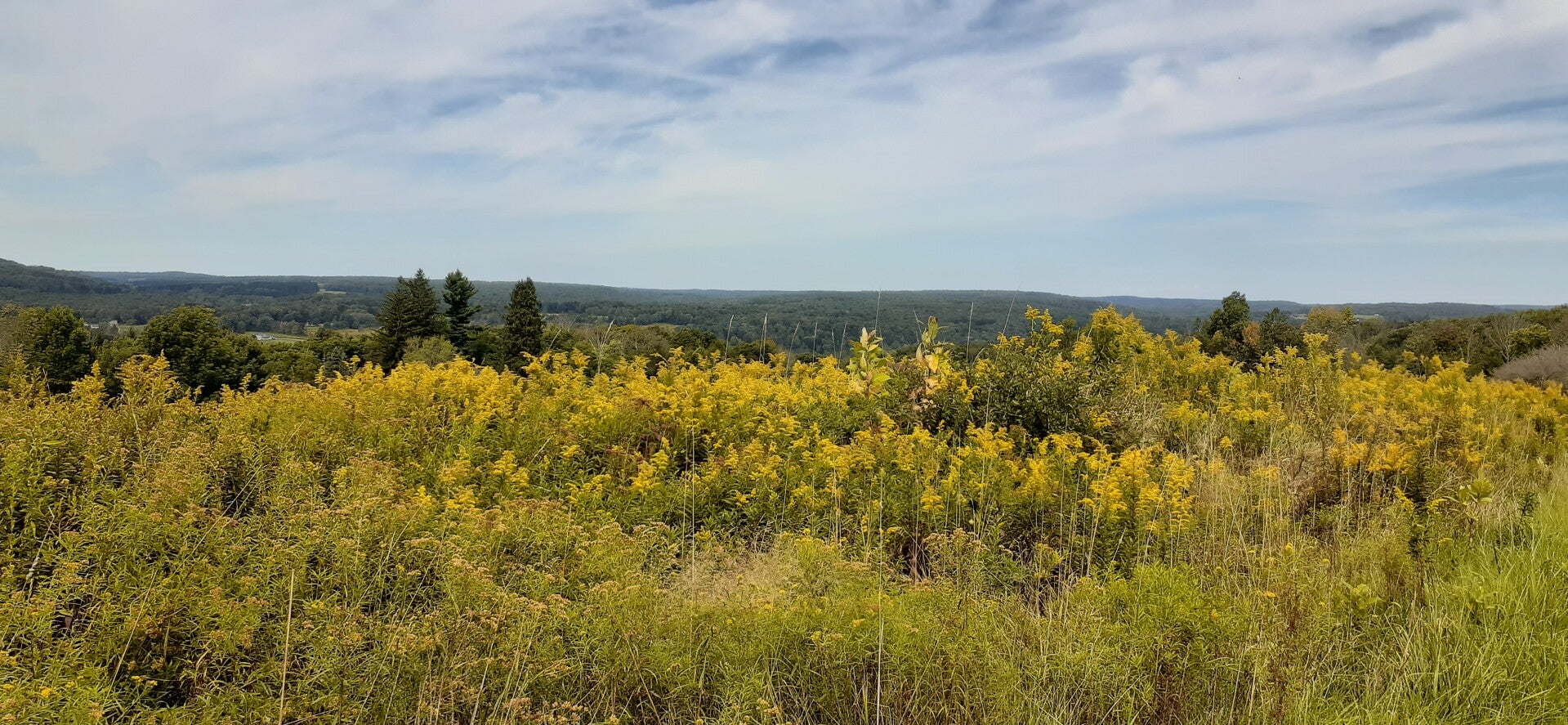



Goldenrod At A Glance 👀
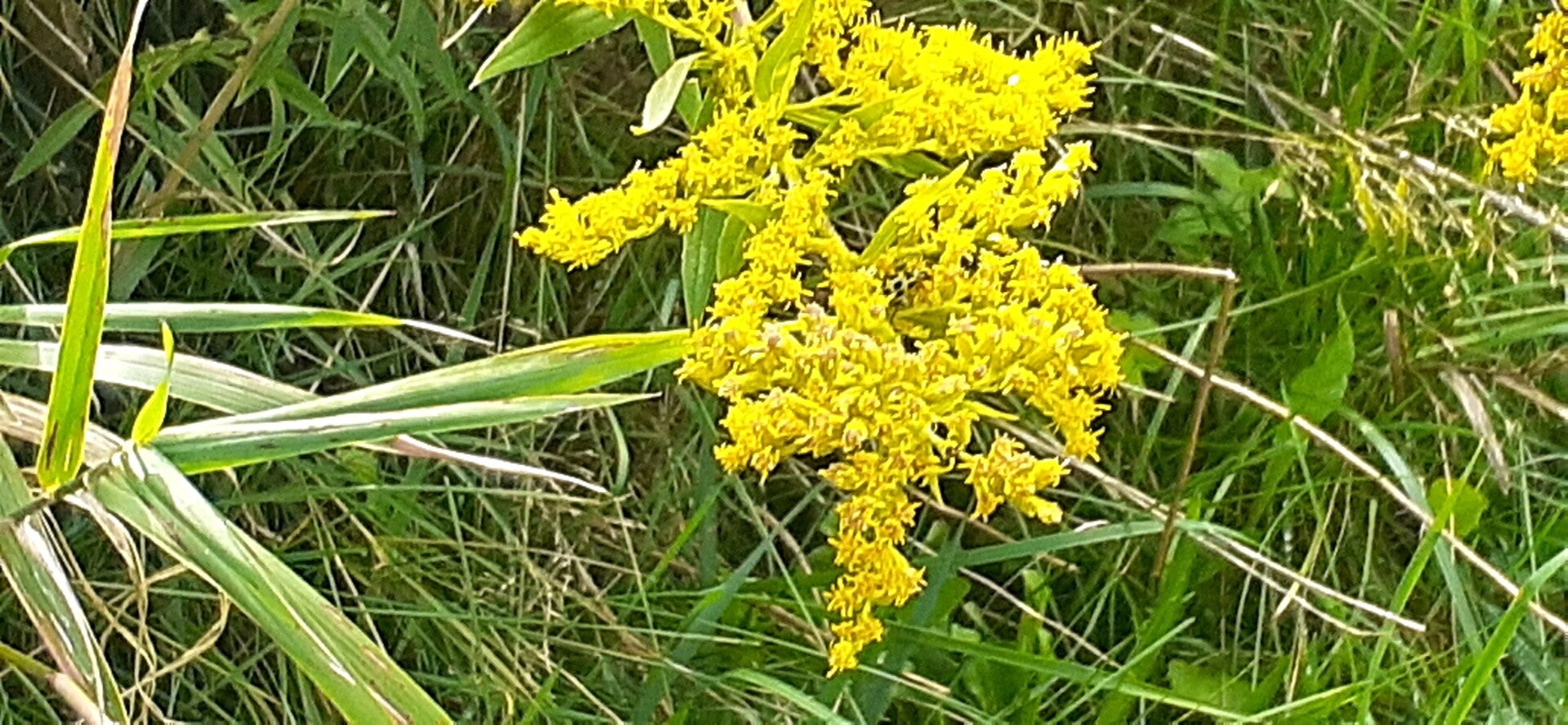
Goldenrod is a perennial flowering plants belonging to the aster family. It's scientific name is Solidago. The Goldenrod family consist of more than 100 species, most of which are native to North America. Goldenrod species vary in height, leaf shape, and growth habit, but they are best recognized by their clusters of small golden-yellow flowers carried on upright, leafy stems.
Goldenrod has long been noticed, gathered, and valued for its vibrant color, varied textures, and distinctive seasonal character. As a familiar and widely cherished plant, it is a classic example of the deep connection generations of people have shared with the plants growing in the landscapes around them. Today, Dried Goldenrod continues to be appreciated as a natural botanical material for traditional and contemporary crafting and art.

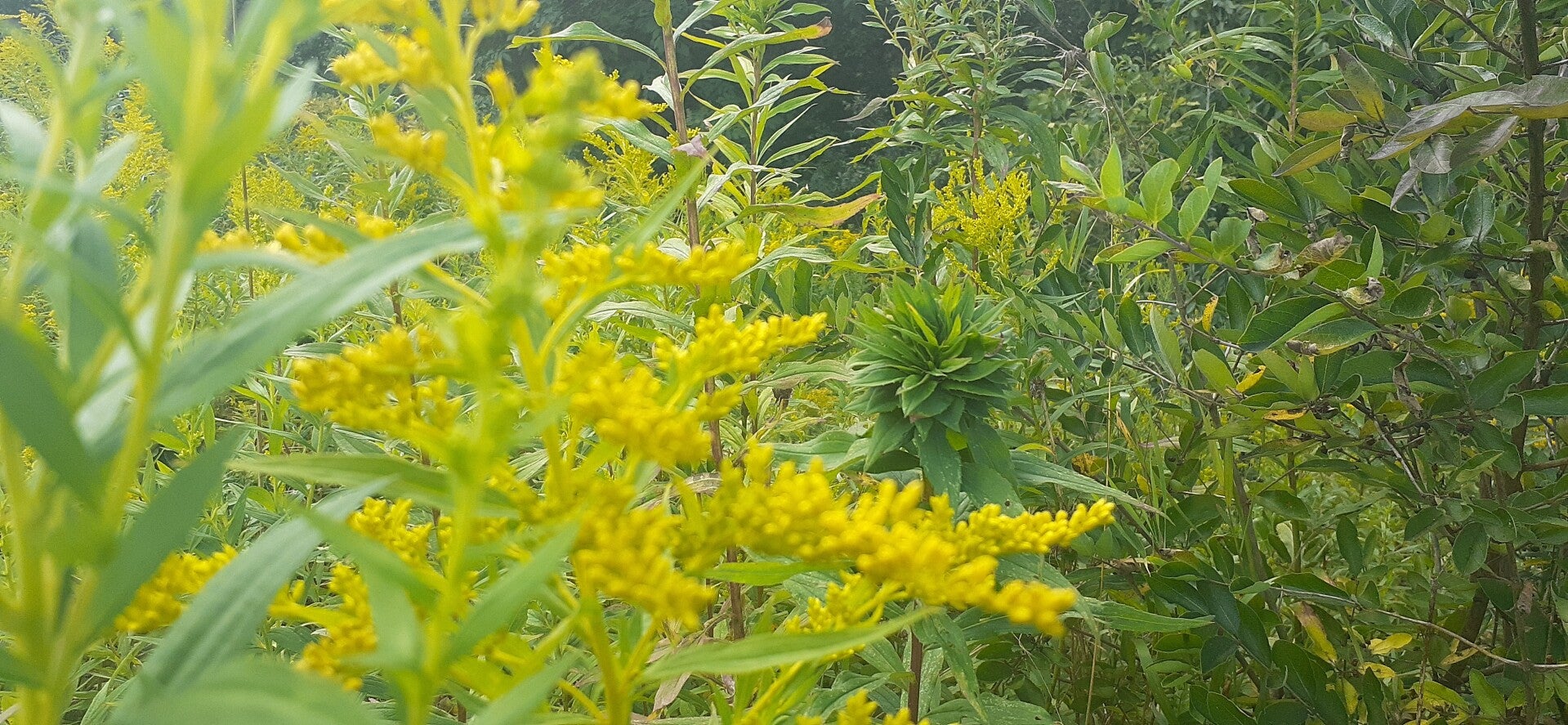
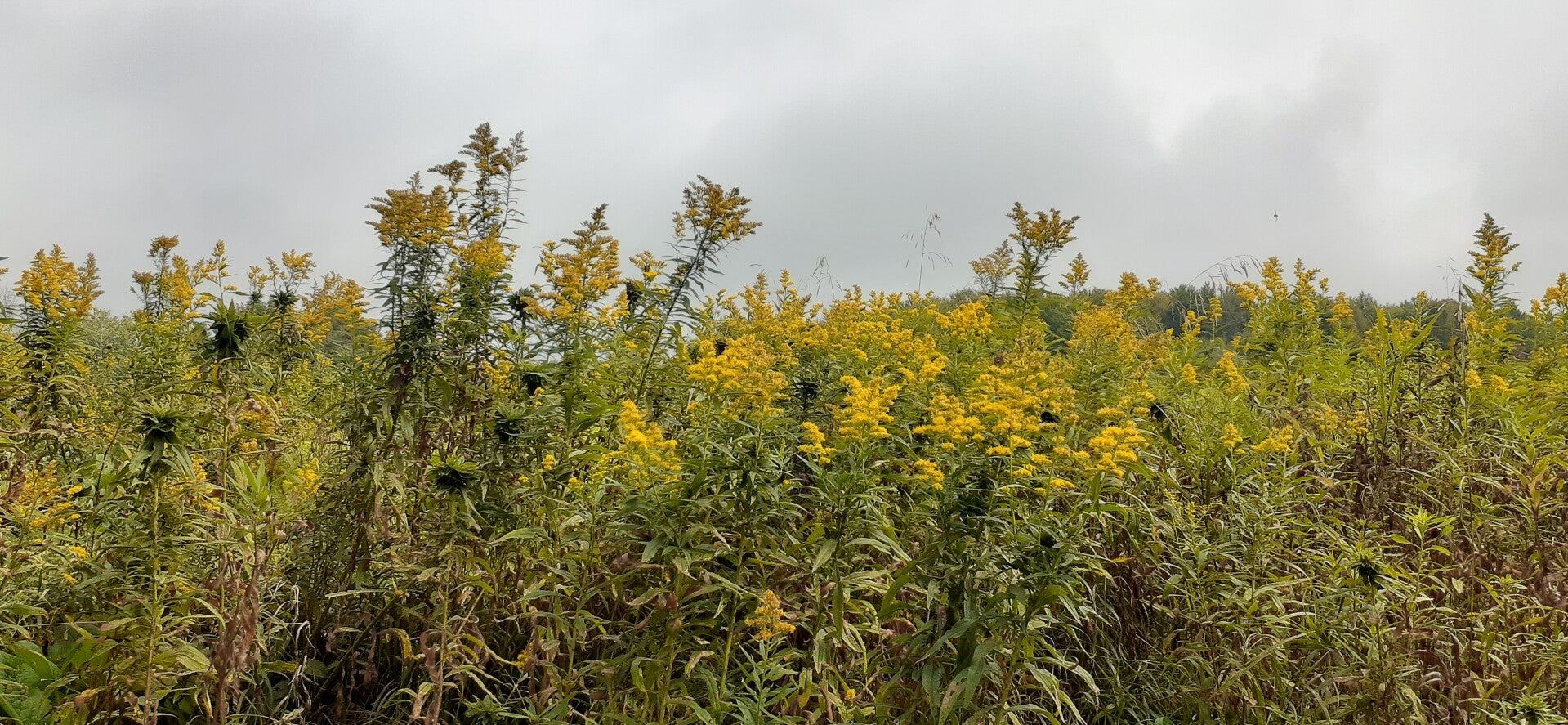

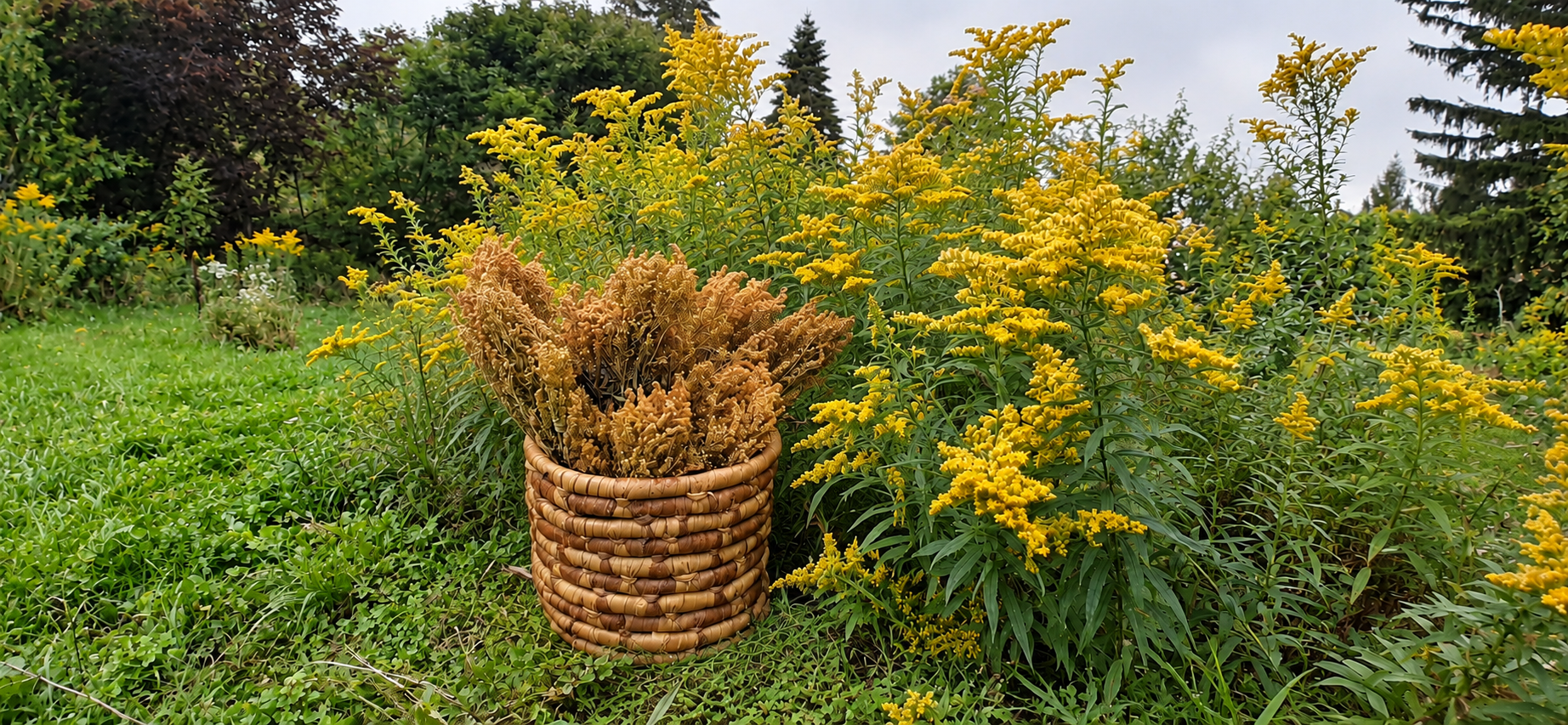
GROWING THE GOLDENROD
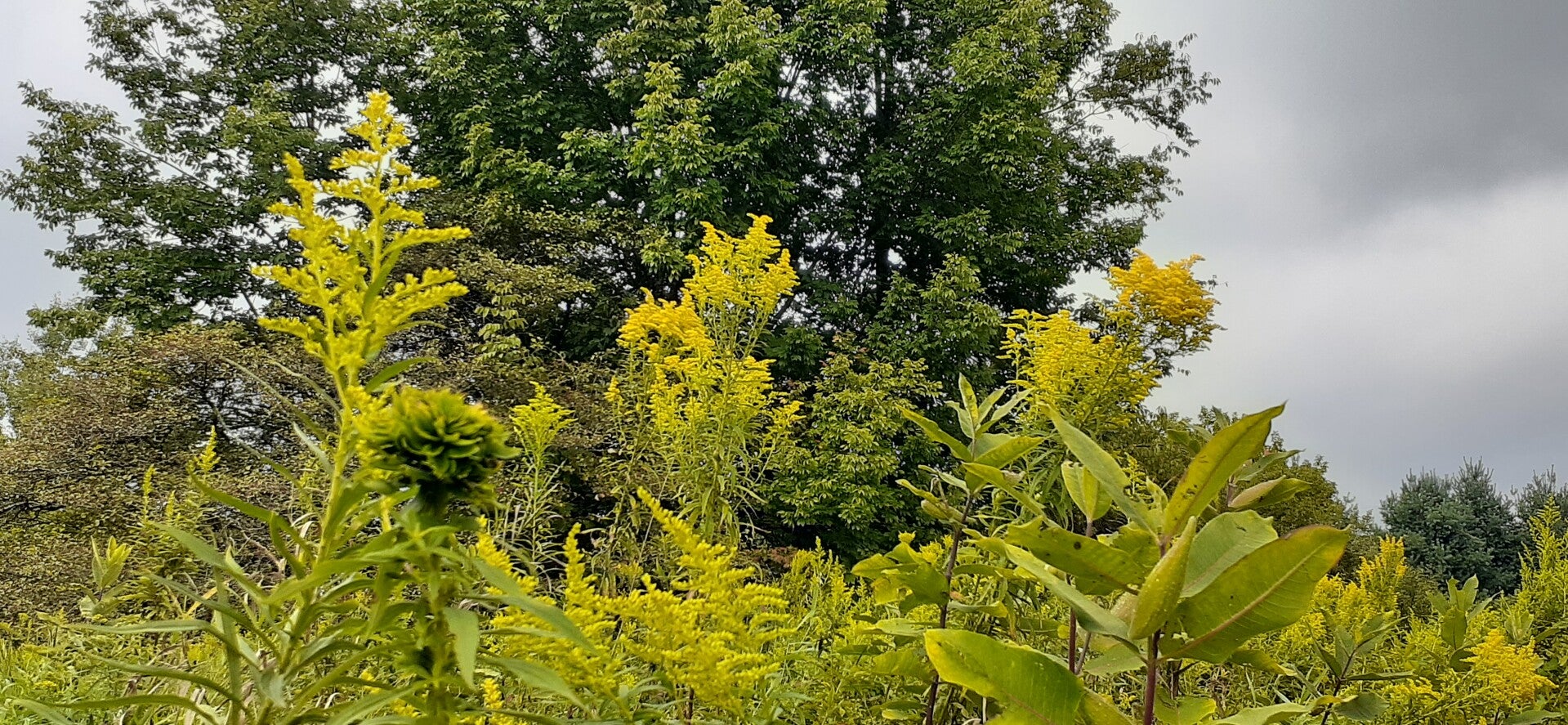
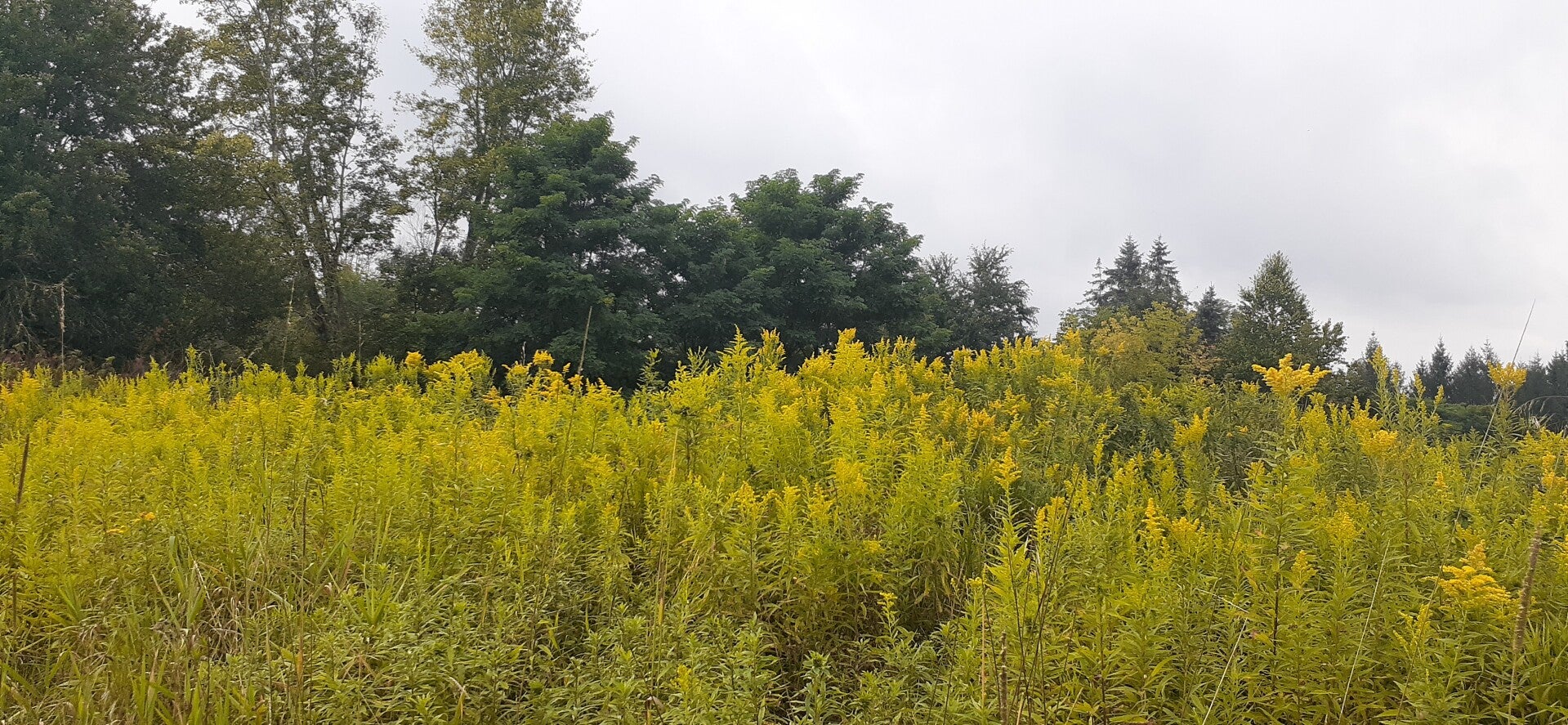
Mountain Fables Dried Goldenrod is wildcrafted. It is carefully hand gathered from the fields, woodland edges and from the outer edges of my yard in Central NY State, USA. No synthetic or organic fertilizers or pesticides are used. Just Mother Nature doing her thing! It is a raw, unrefined. responsibly sourced, harvested and dried product perfect for crafting and art projects.
HARVESTING THE GOLDENROD
Thoughtful Harvest
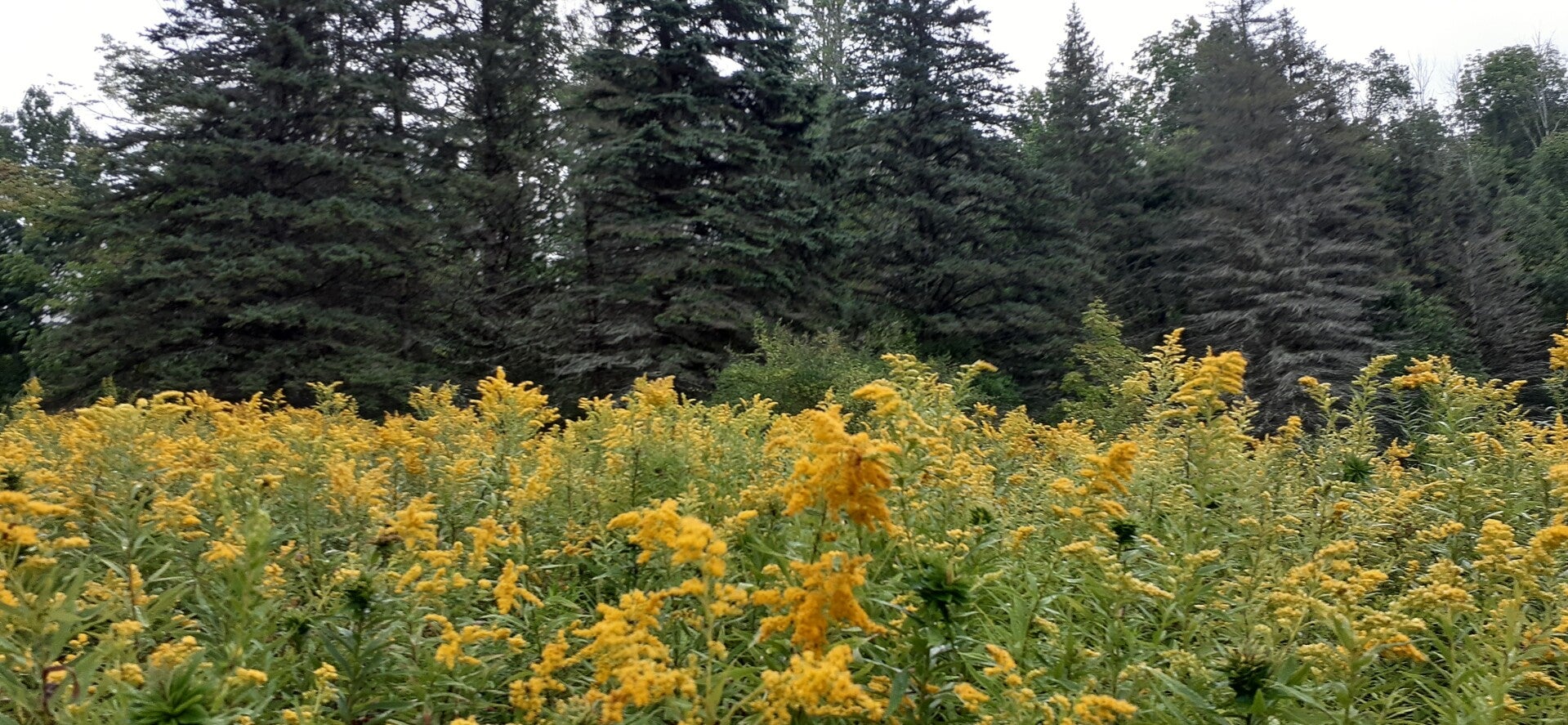
When it is time to harvest Goldenrod for drying, great care is taken to consider the pollinators. Goldenrod is wonderfully abundant, allowing us to gather what we need without depriving insects of their share. There is so much of it that, without an appreciation for its beauty and many uses, it could easily be seen as a nuisance.
Unopen Buds For Craft and Art Drying
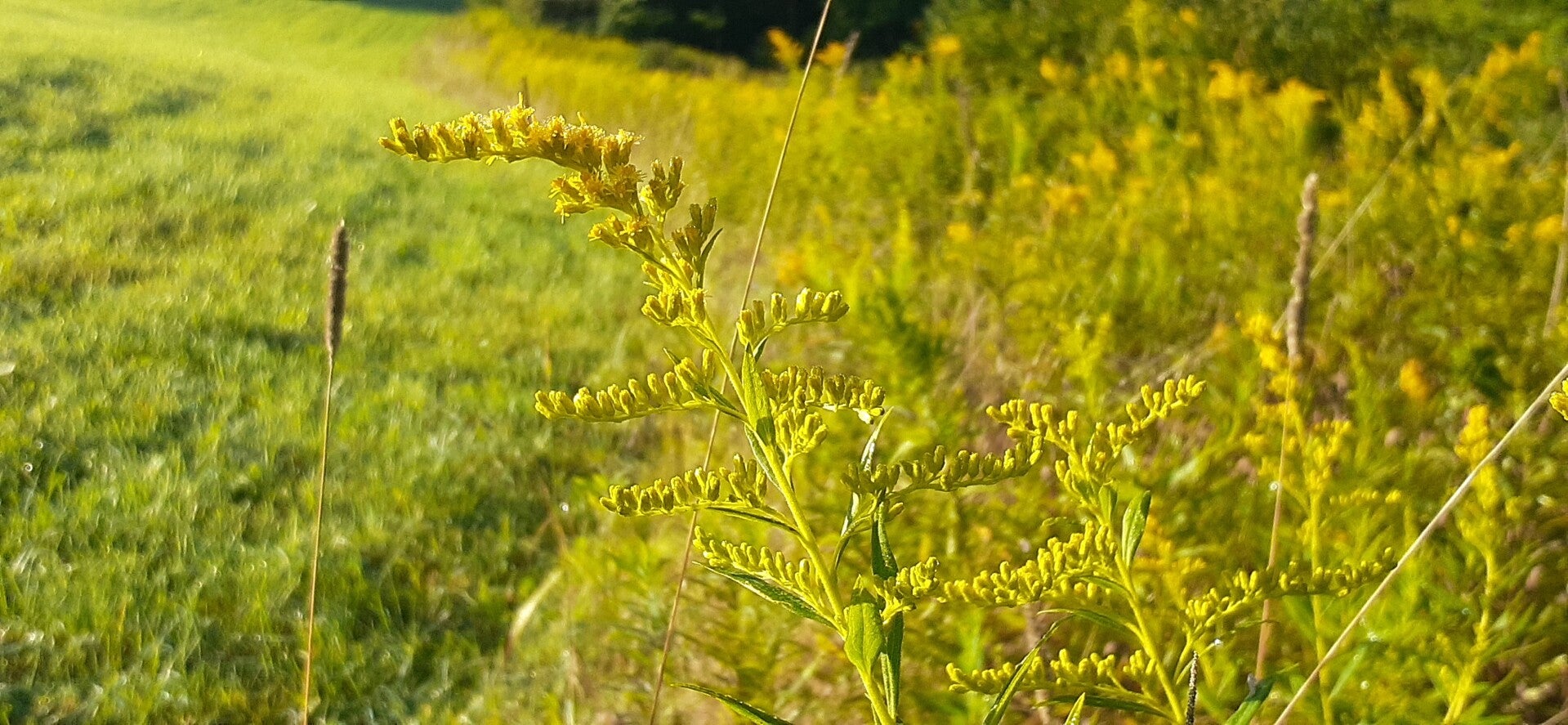
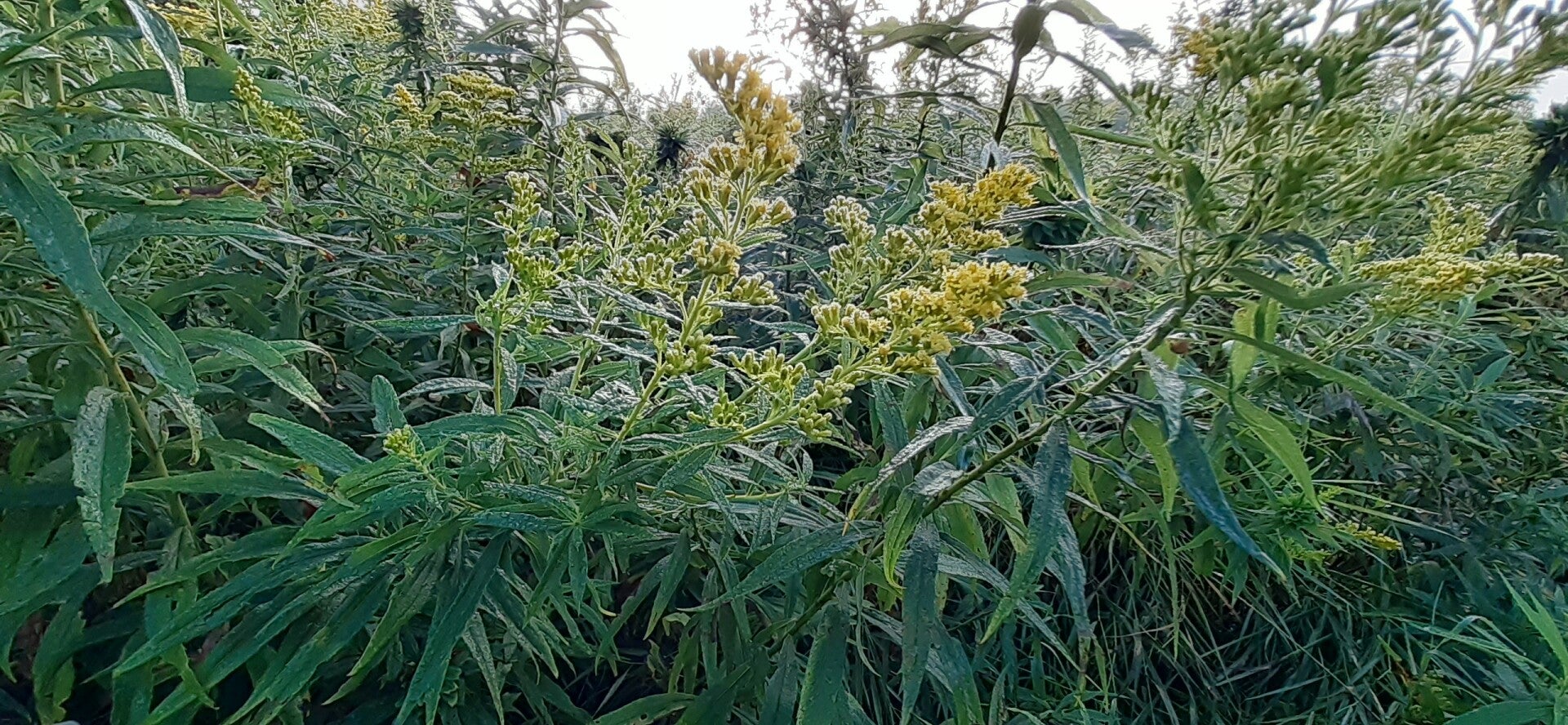
For craft and art drying purposes the blooms are best picked in the beginning of the flower's bloom cycle, just before any of the buds open up or just as a few top buds begin to open.
Insects Love Full Bloom
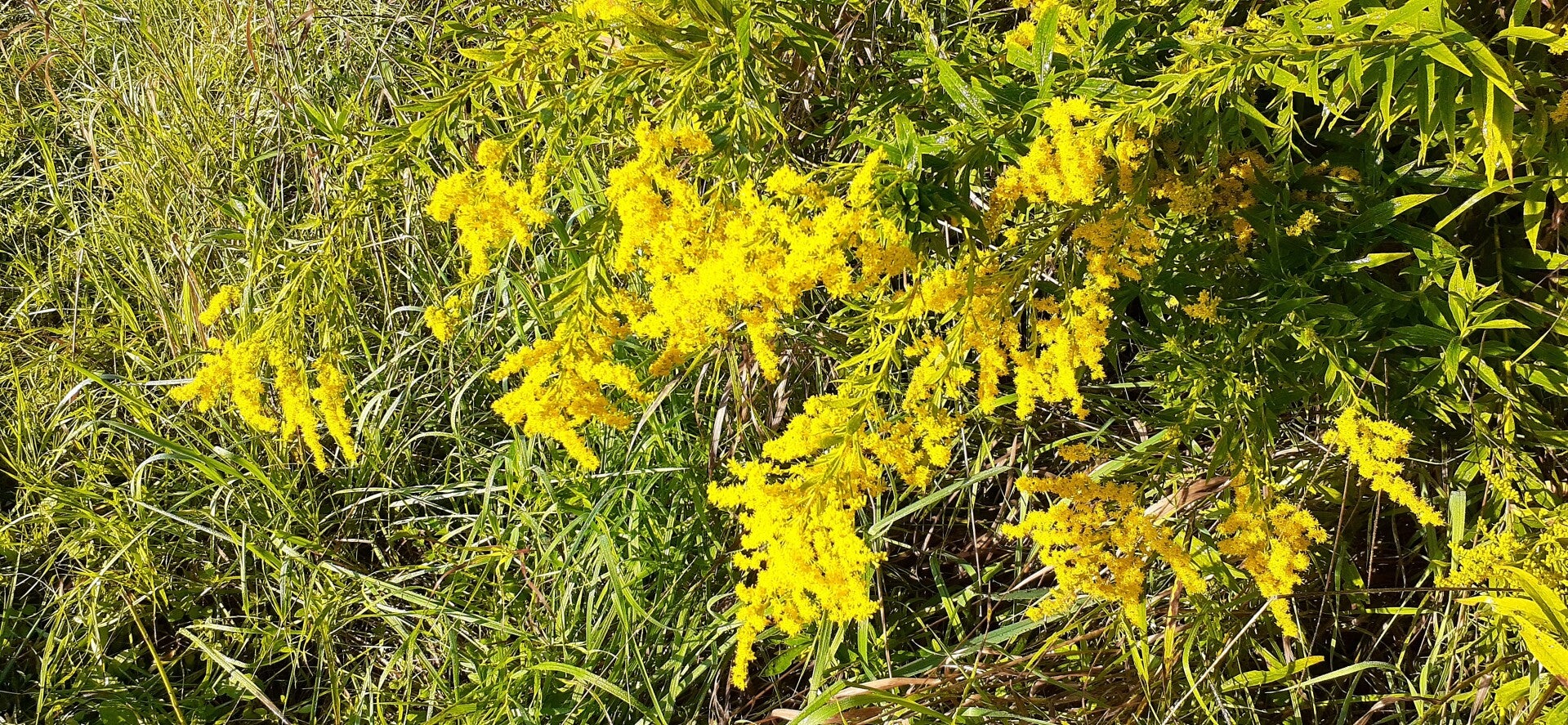
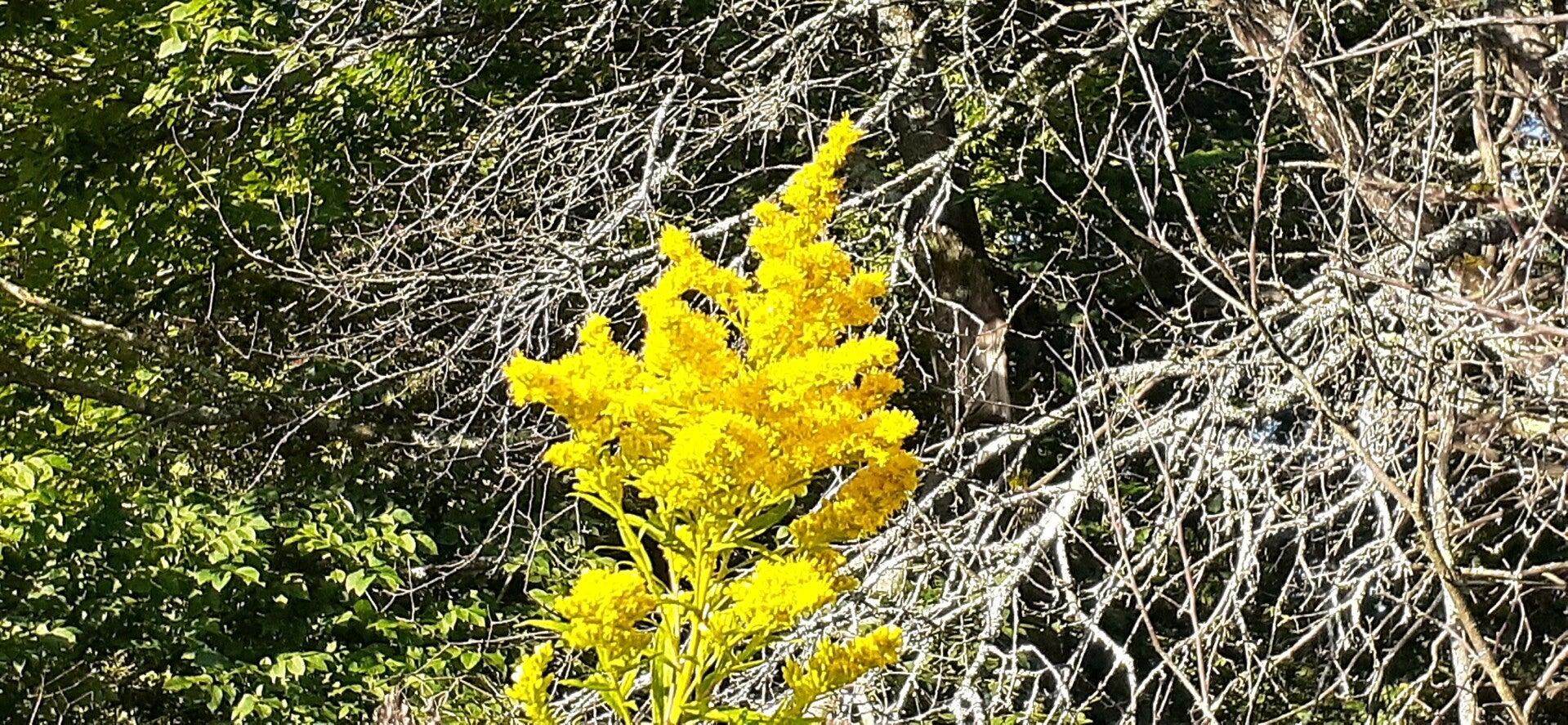
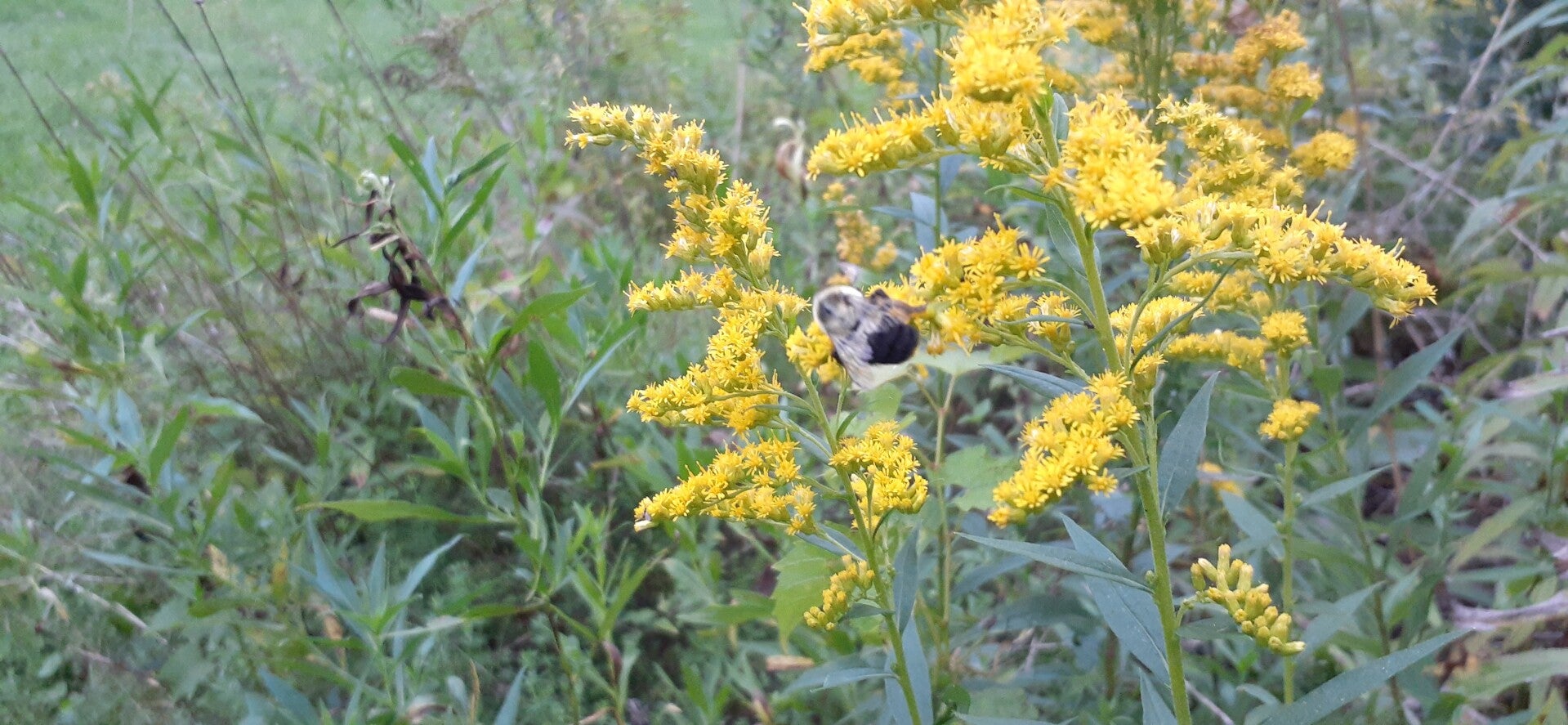
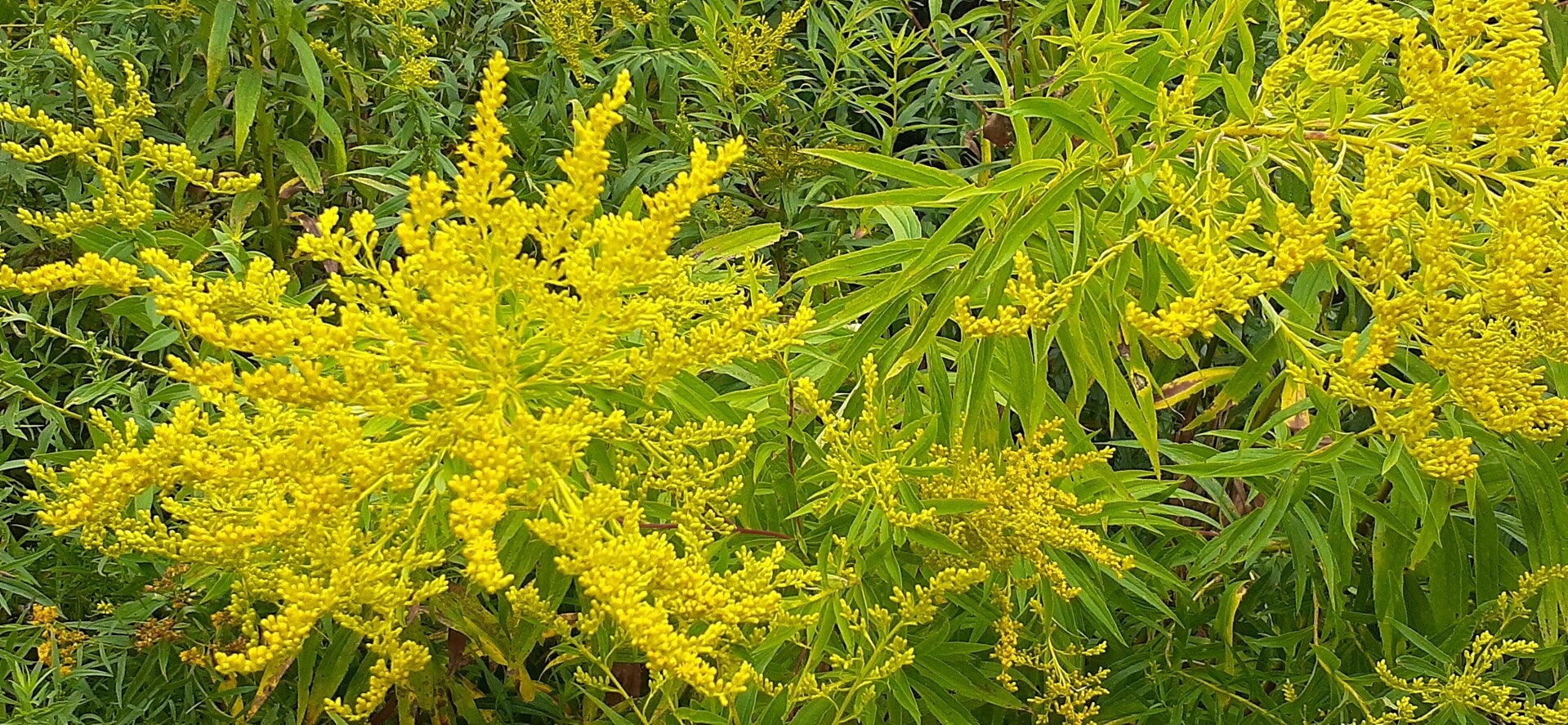
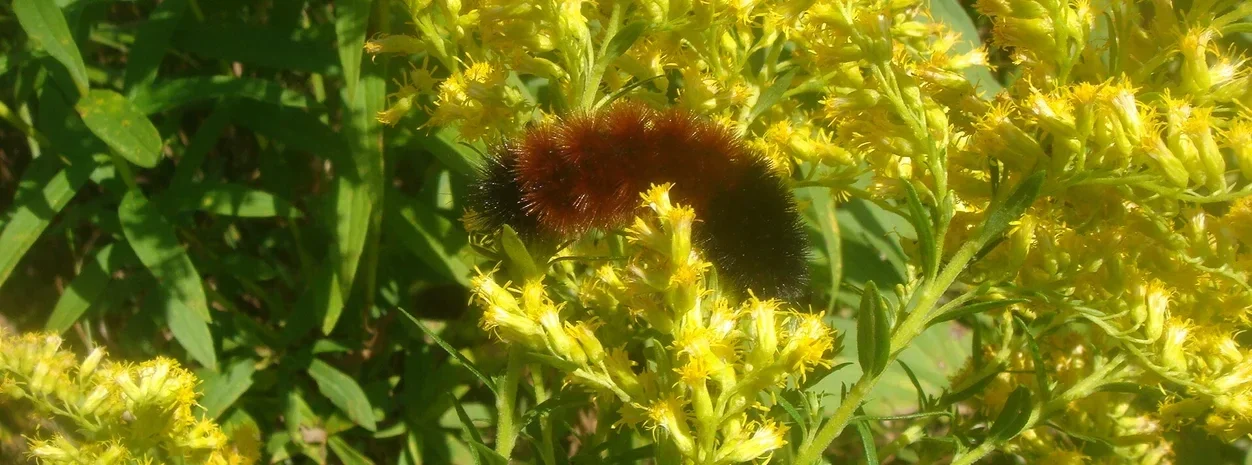
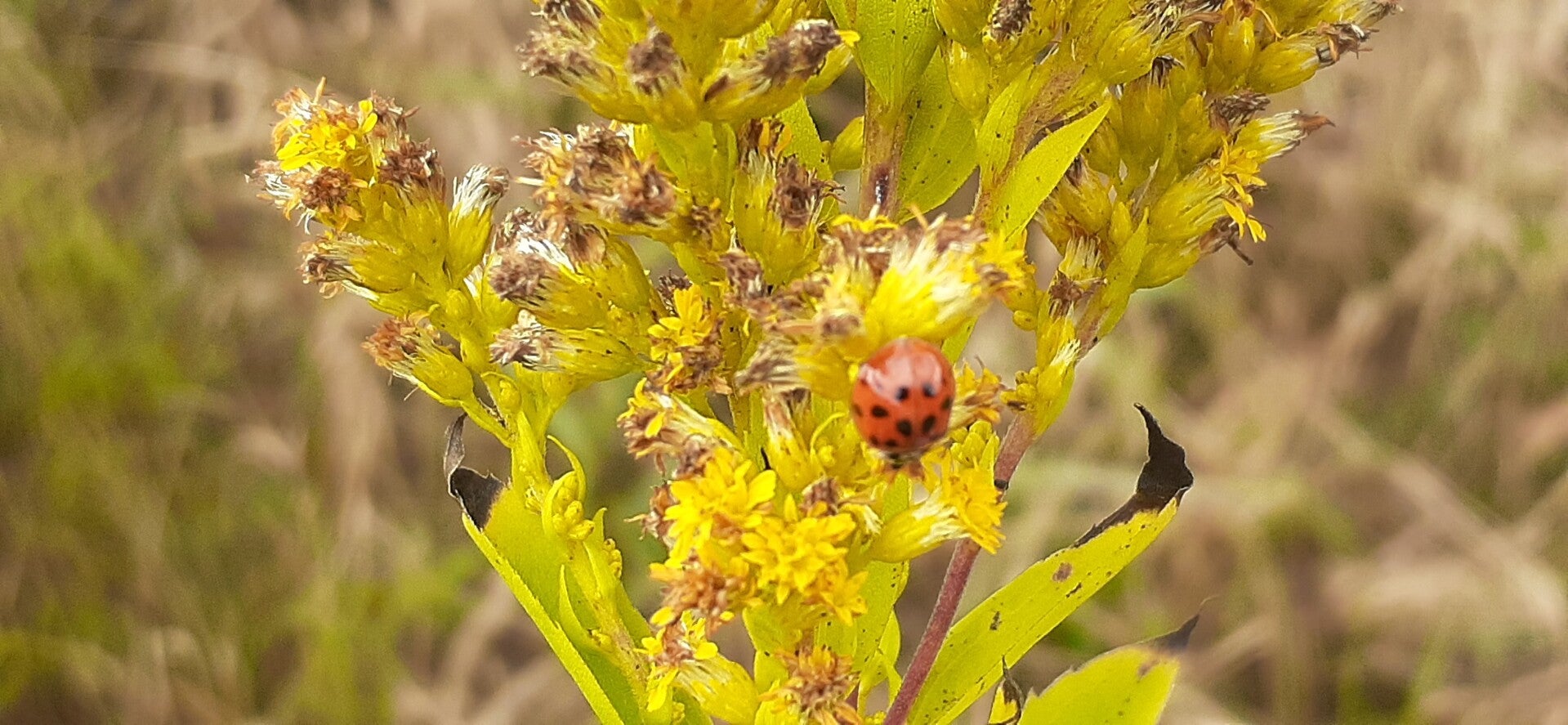
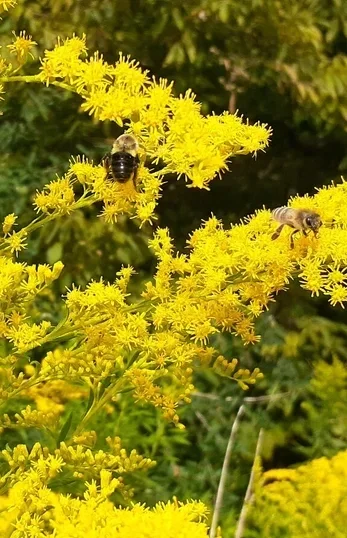
Insects, however, prefer the peak bloom cycle, when the bright golden flowering clusters are fully open. As one of the season's last major blooms, goldenrod draws all types of insects. They show up in droves, busily gathering nectar from the moment the afternoon sun warms the air until dusk. By the time the flowers are in full bloom and the insects begin their harvest, ours is complete, so not only do we not deprive them of their share, we do not get in their way. For me - It's picture time!
Harvest Procedure

Standing Goldenrod refers to upright stems that have not drooped or fallen. Fallen Goldenrod is not used. Although Standing Goldenrod is typically very clean, each stem is visually checked during harvesting. After collection, before bundling, each stem is inspected again and gently rinsed. Then several stems are tied into a small bundle.
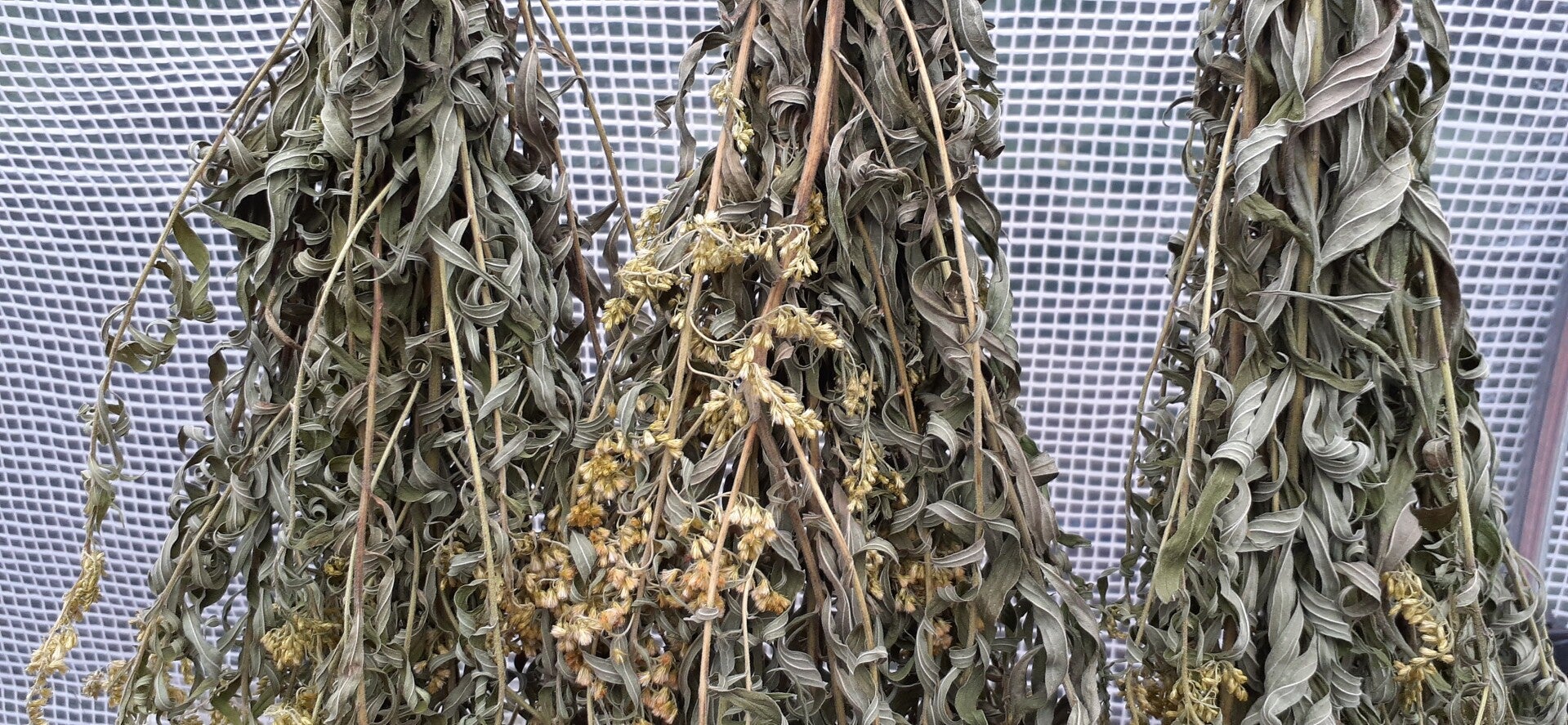
In an effort to provide raw craft material that is as free as possible from visible insects, loose soil, and natural debris, each bundle is given a final rinse and shake. The bundles are then taken to the greenhouse, where they hang until fully dry and crispy. Complete dehydration is essential, as even the slightest amount of moisture can cause mold and spoilage. *** The finished Goldenrod is prepared exclusively for craft and art use; it is neither processed as food nor intended for human or animal consumption.
DRYING THE GOLDENROD
EXAMINING DRYING METHODS
Dried Naturally By Mother Nature
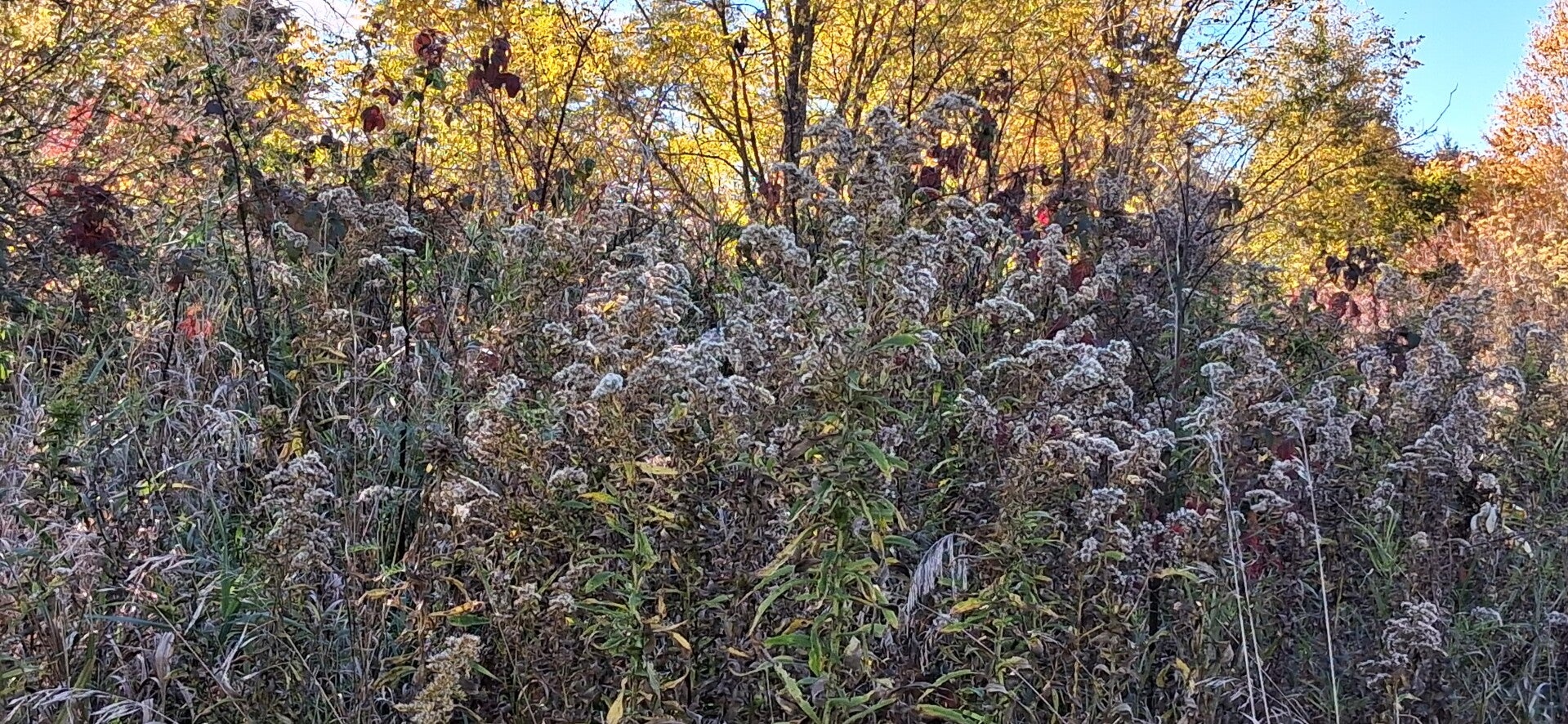
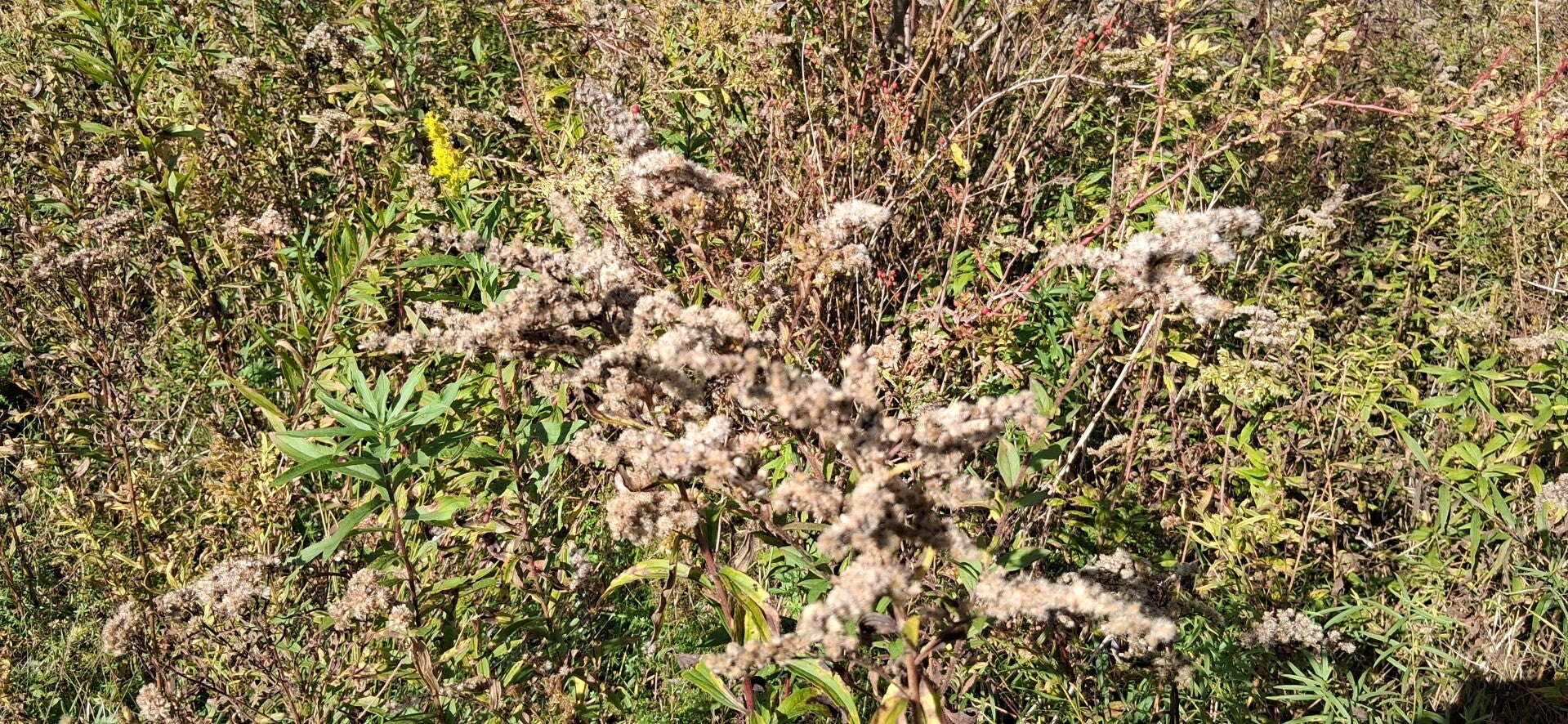
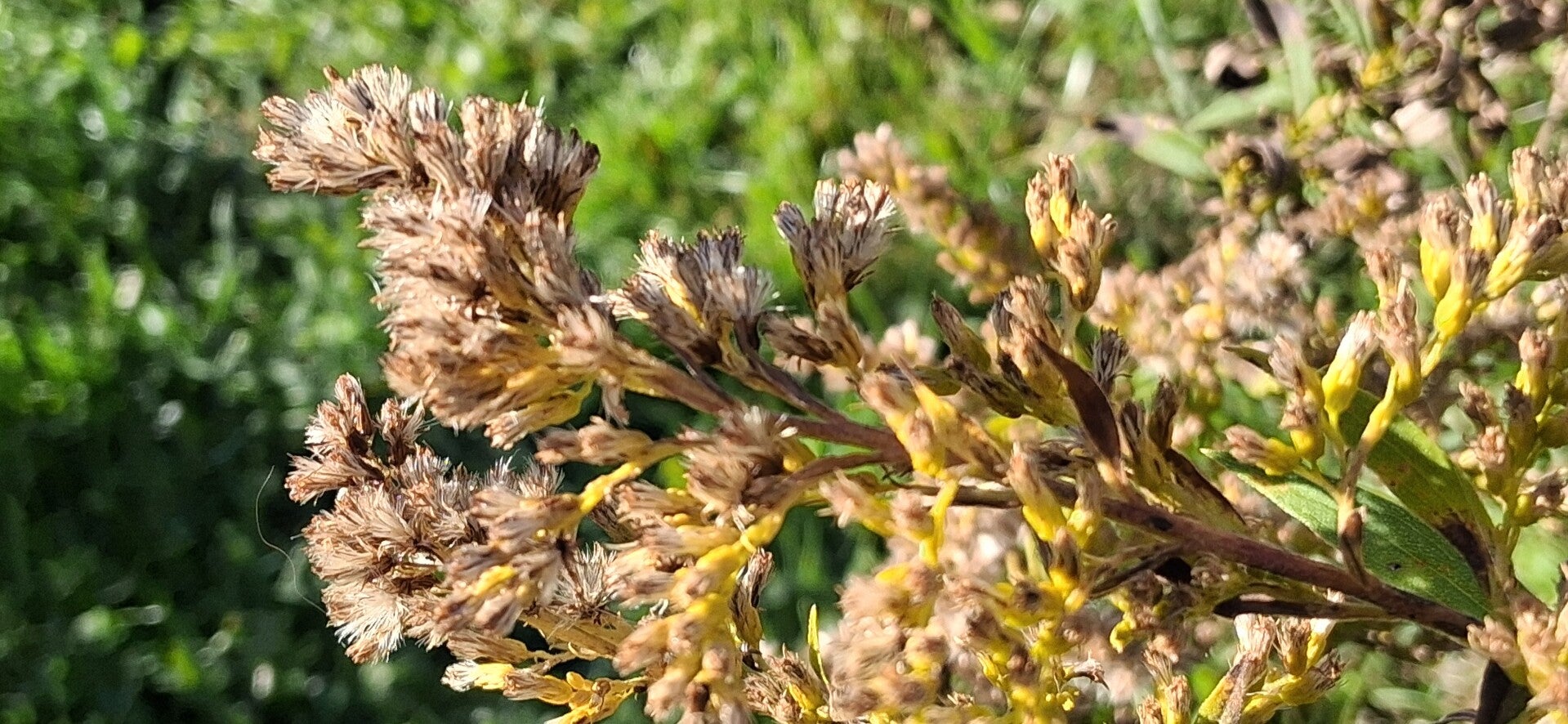
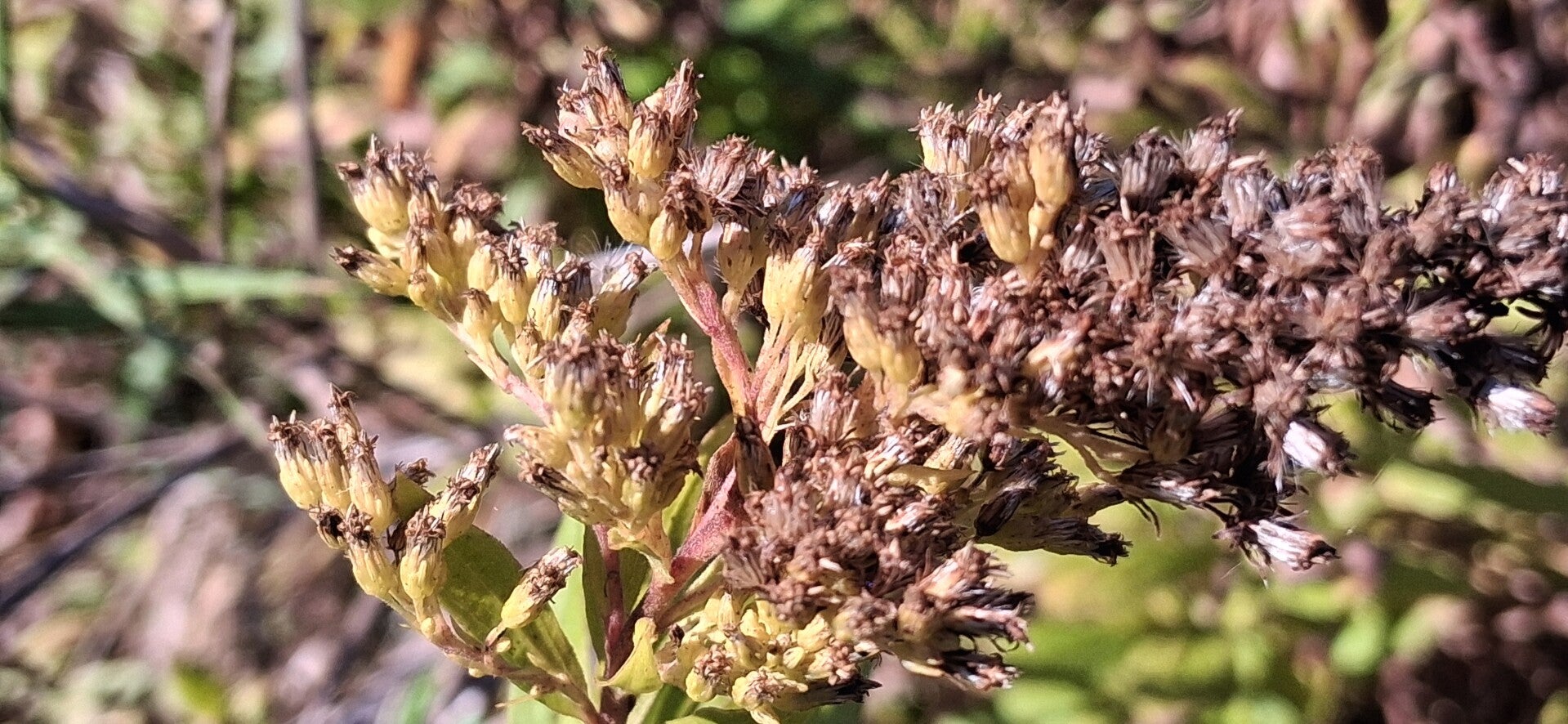
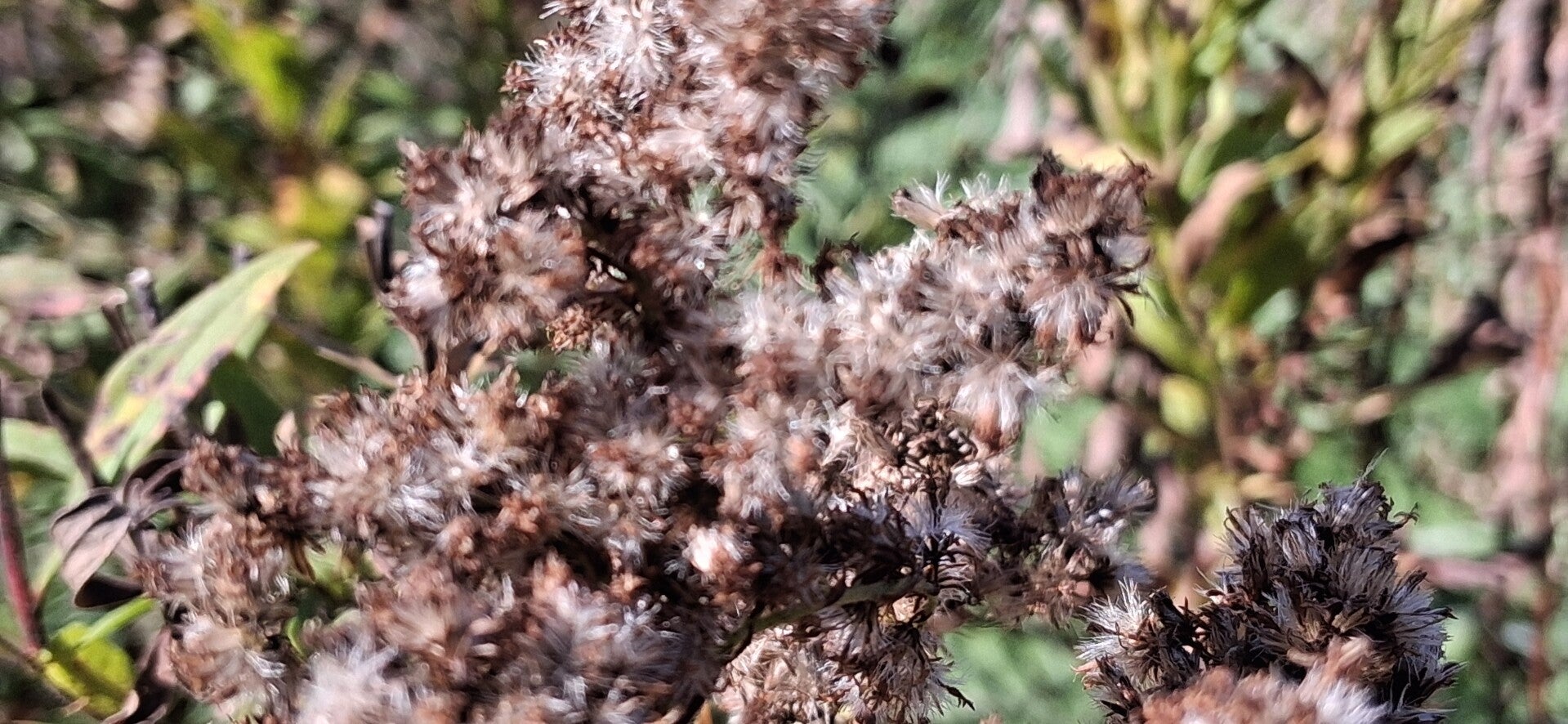
Drying in the field while the stem is still on the live plant is a very natural way of letting Goldenrod dry. However, not the most efficient or attractive. The stems and flowers of the live plant take a long time to dry completely. Eventually the flowers turn to puff balls (like dandelion and thistle flowers) and make seed, while the stems and leaves turning a deadly dull brown color. This method is great for the ecosystem: winter foraging for birds, small mammals, and for over-wintering insects, but not for craft and art purposes.
Individual Flat Drying
Goldenrod may be dried flat. This technique is efficient when there is a small quantity to be dried. It is very good for individuals who are processing and storing their Goldenrod for personal use. This drying method is usually done indoors on a flat surface. It may be done outdoors if weather is agreeable for a long enough period. Mountain Fables processes such a large volume that this method would not be practical.
Dehydrating Equipment
Using a dehydrator is another option for drying small quantities of material. While it can be used for larger volumes, the equipment, space, electricity, and labor required make it costly. For this reason, dehydration is not suitable for the Mountain Fables drying process.
Hang Drying
Hang drying is a traditional, method used to save plantae for storage or display. The plants are tied in small bundles by their stems and hung upside down to dehydrate. For Mountain Fables, hang drying Goldenrod is a more efficient and cost-effective drying method. This centuries old approach saves the plant’s natural compound profile while allowing it to dry in a timely manner.
Hang drying also respects the environment by reducing energy consumption, as it eliminates the need for electricity. No electricity, no bulky dehydration equipment, no extra space required to house the equipment and no additional manpower to operate it. By using the hang-drying method production costs are dramatically reduced, while remaining environmentally friendly and preserving product quality. The result? The savings are passed directly on to you through generous packaging sizes.
Environmental Responsibility and Customer Satisfaction - Values that Mountain Fables stands by!
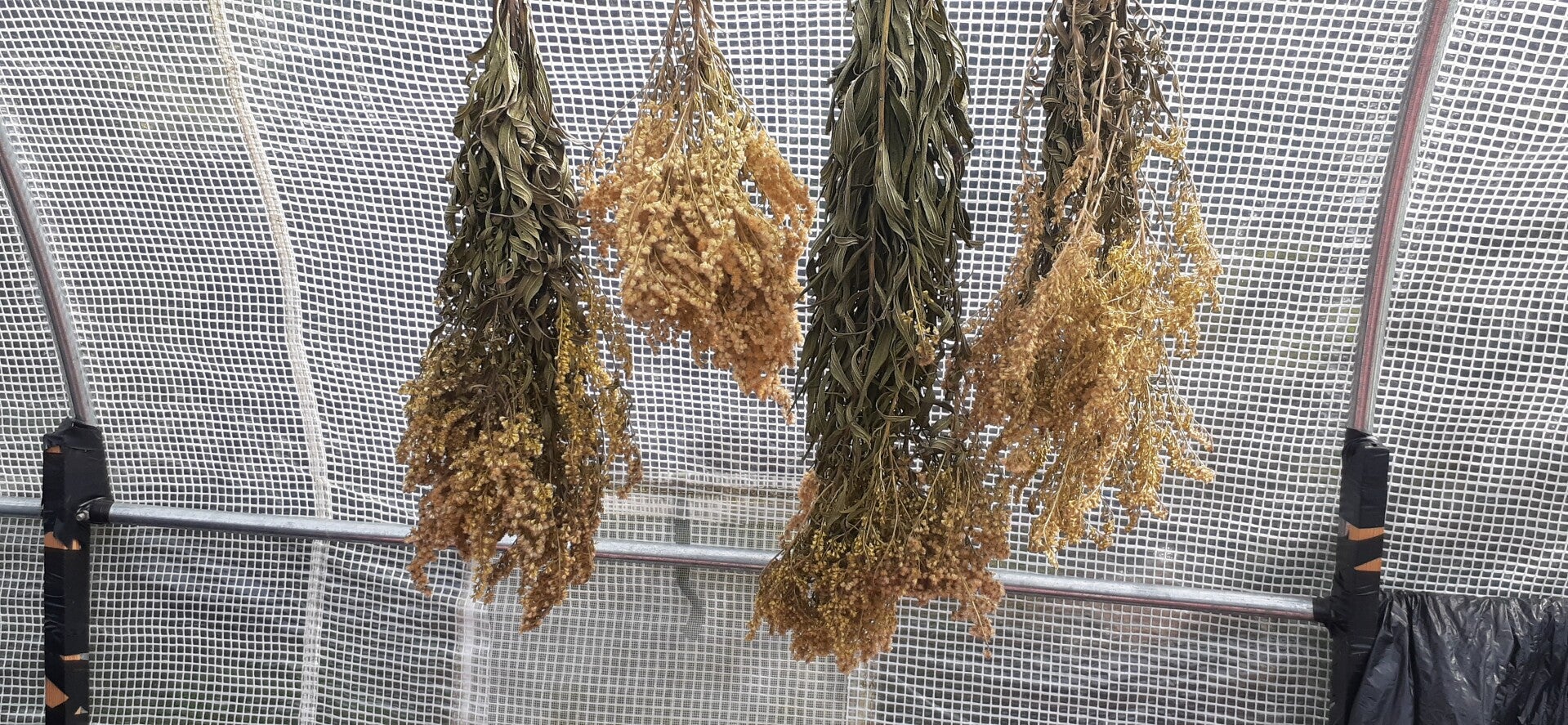
MOUNTAIN FABLES GREENHOUSE DRYING
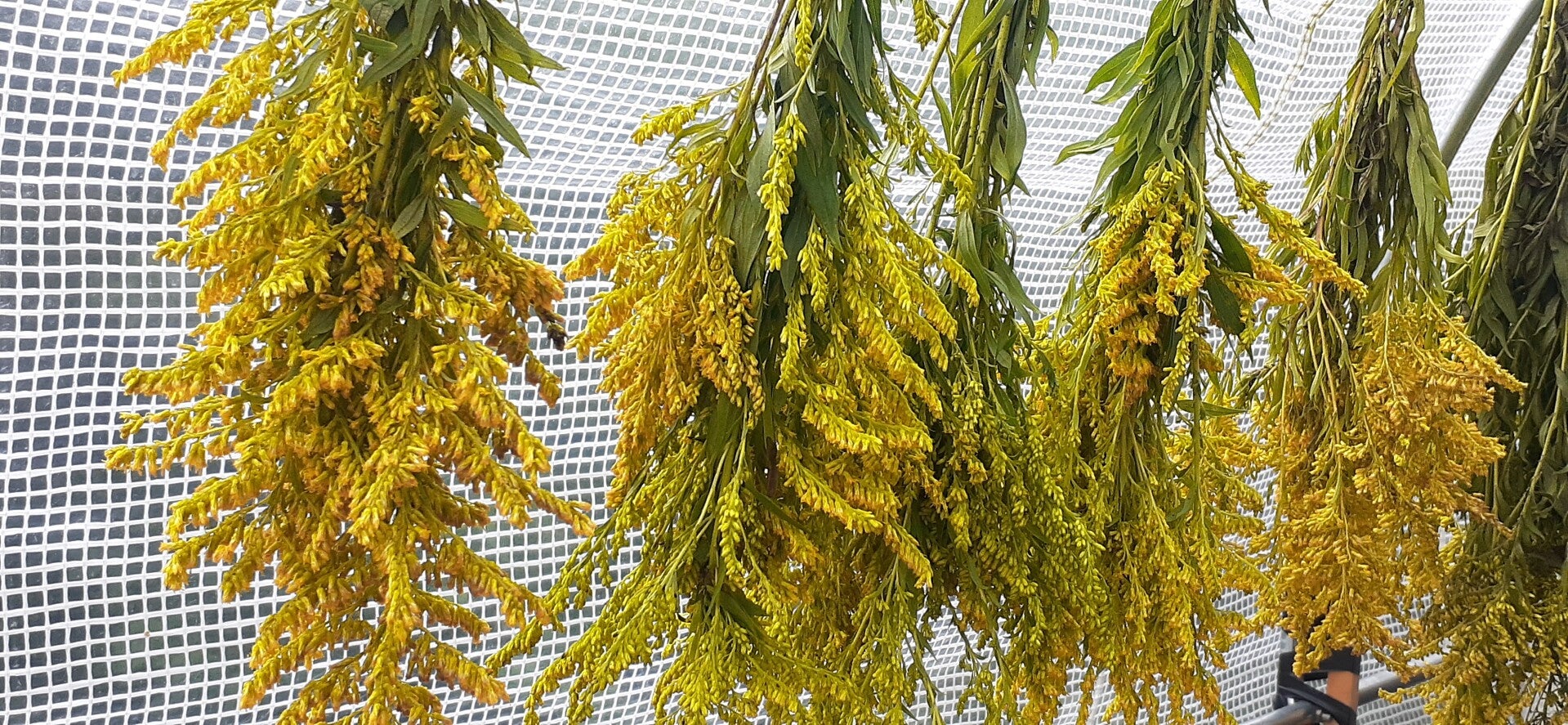

Once thoroughly dry the Goldenrod is ready for packaging.
THE FINAL STEP
PACKAGING
Packaging is the final step in delivering our Dried Craft Goldenrod to you. Once the buds, flowers, leaves and stems have dried the flowering branches are hand separated from the main stem. The Goldenrod is very dry and some parts may crumble when packed. The crumbled plant parts will settle at the bottom of the packaging bag, creating a small amount of usable plant crumble and powder.
INSIDE THE PACKAGE
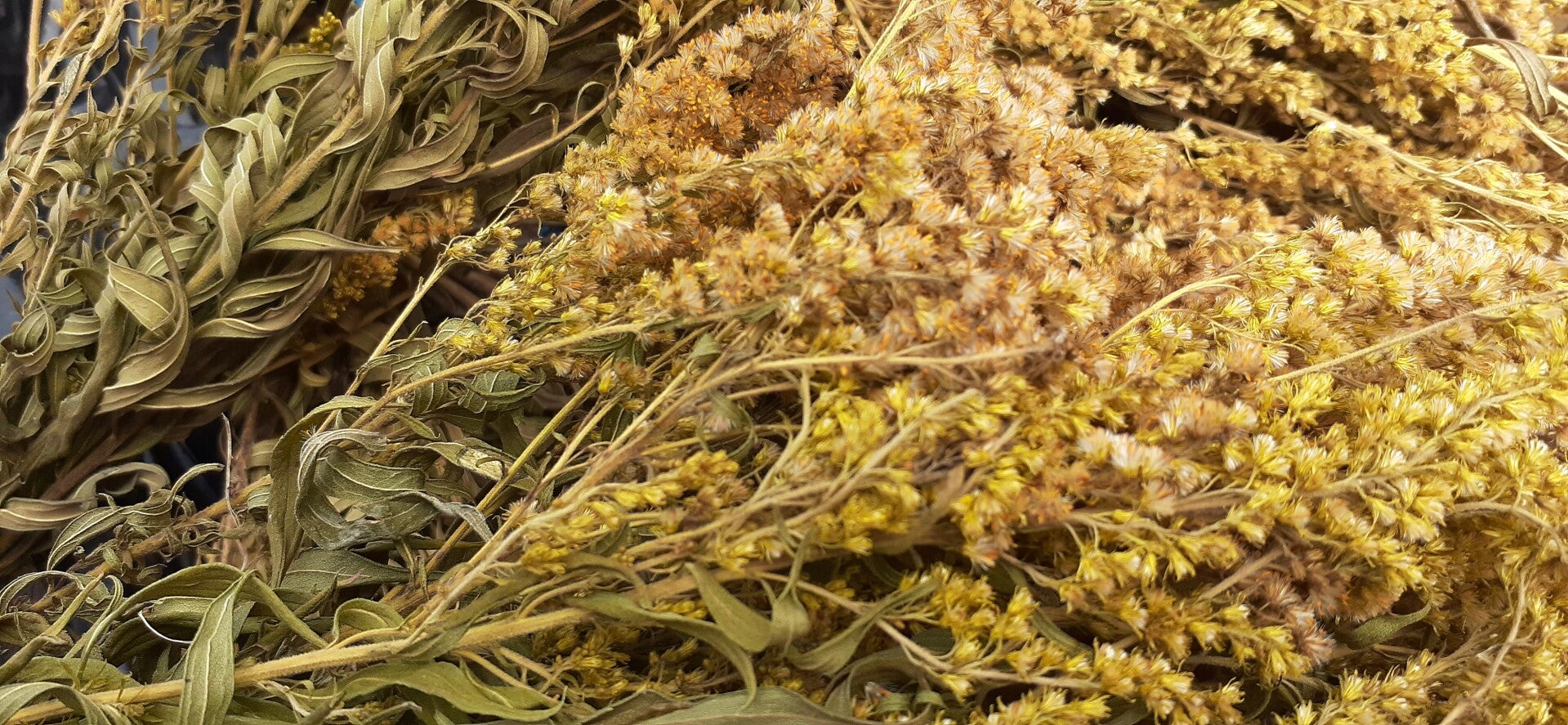
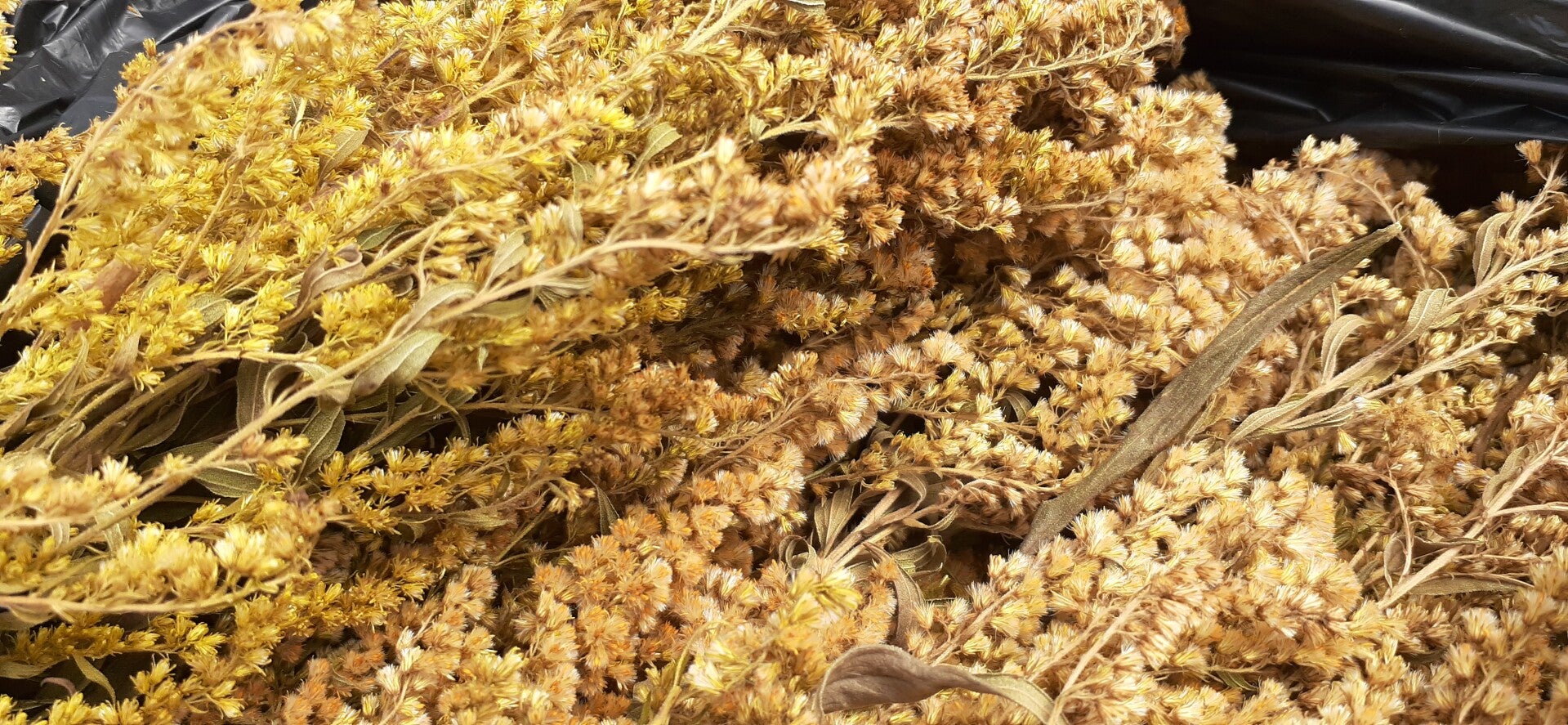
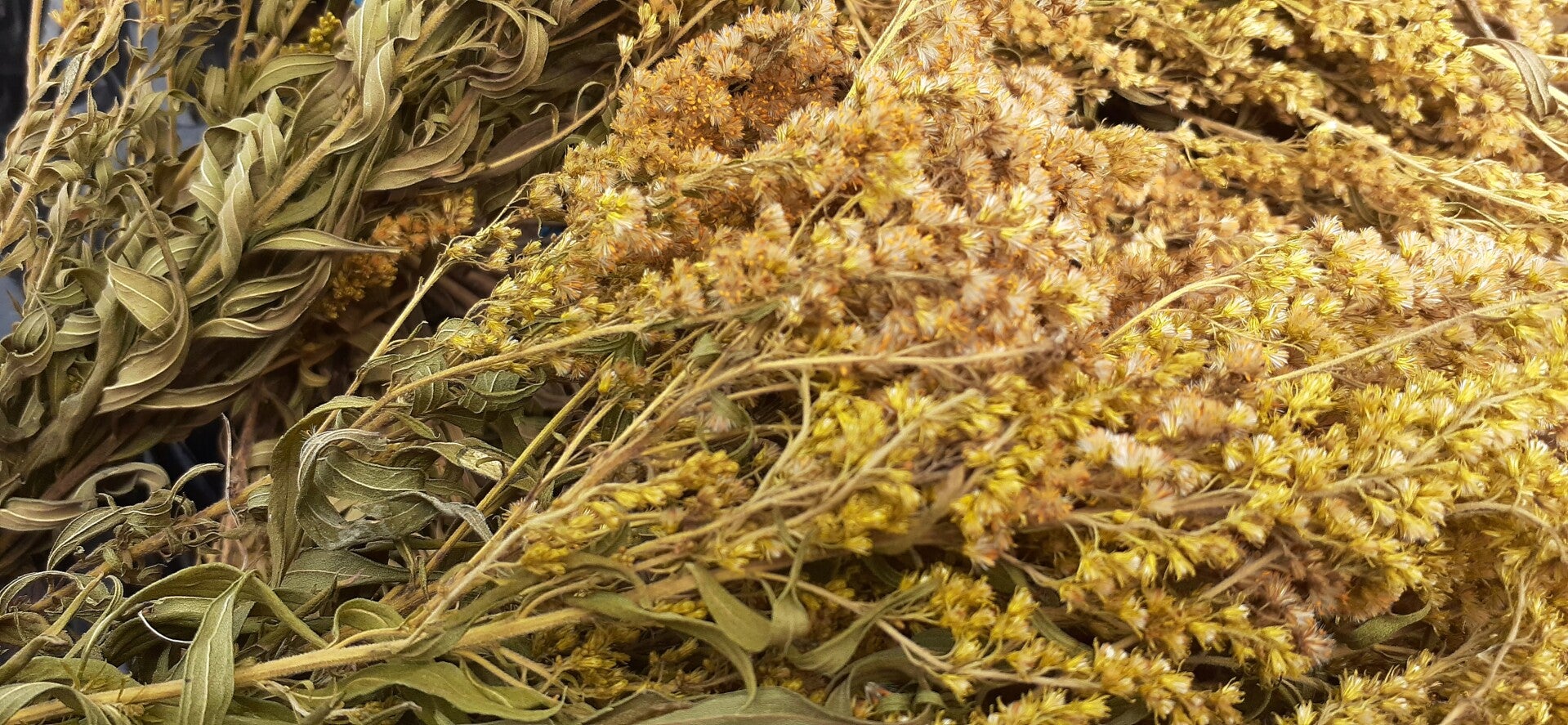
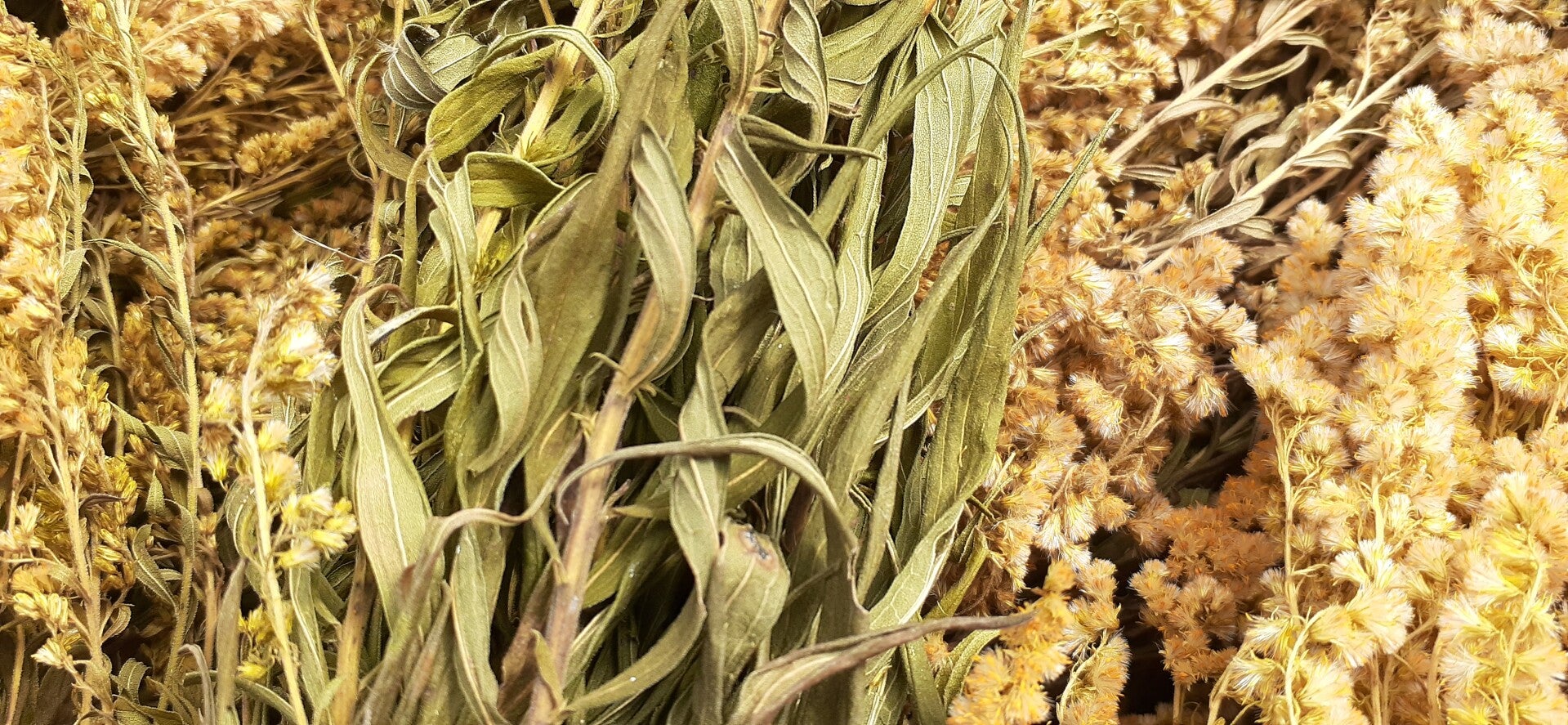
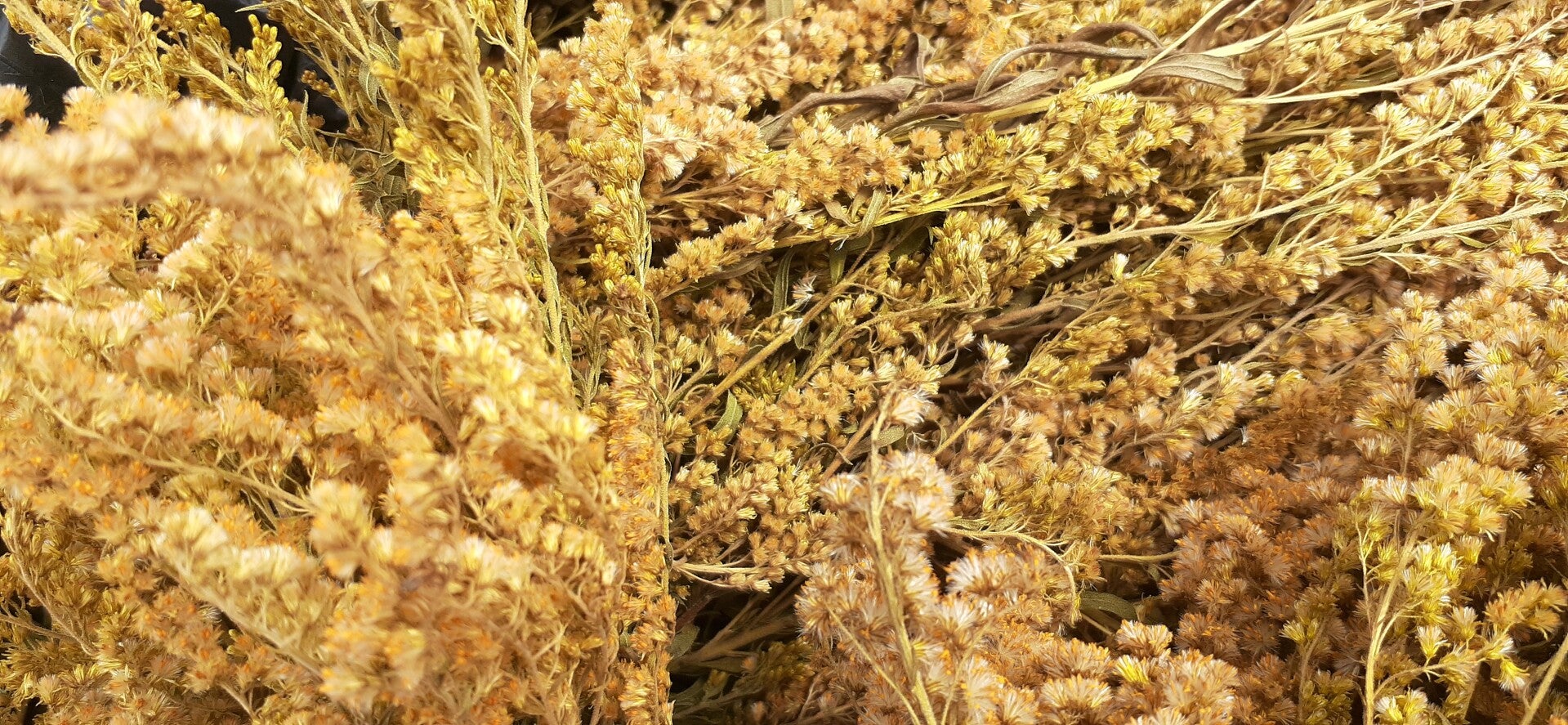
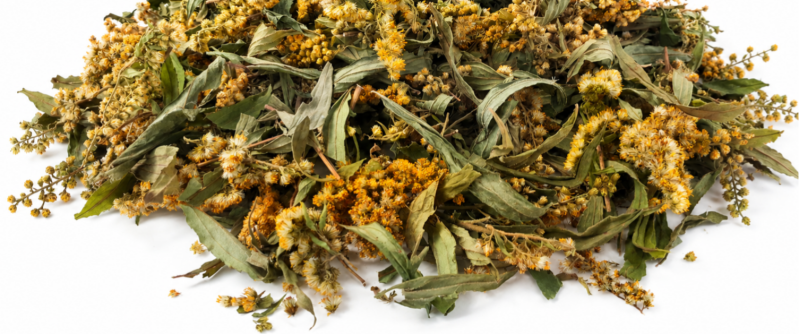
As each Goldenrod stem dries, its buds and flowers develop a unique appearance. Some buds and flowers open slightly, while others unfurl more fully. Color ranges also vary from a creamy beige, a light brown, or to varying shades of yellow.
The images shown (left and below) are examples of the mix of dried Goldenrod buds, flowers and leaves you will find in a package.
PACKAGE SIZES
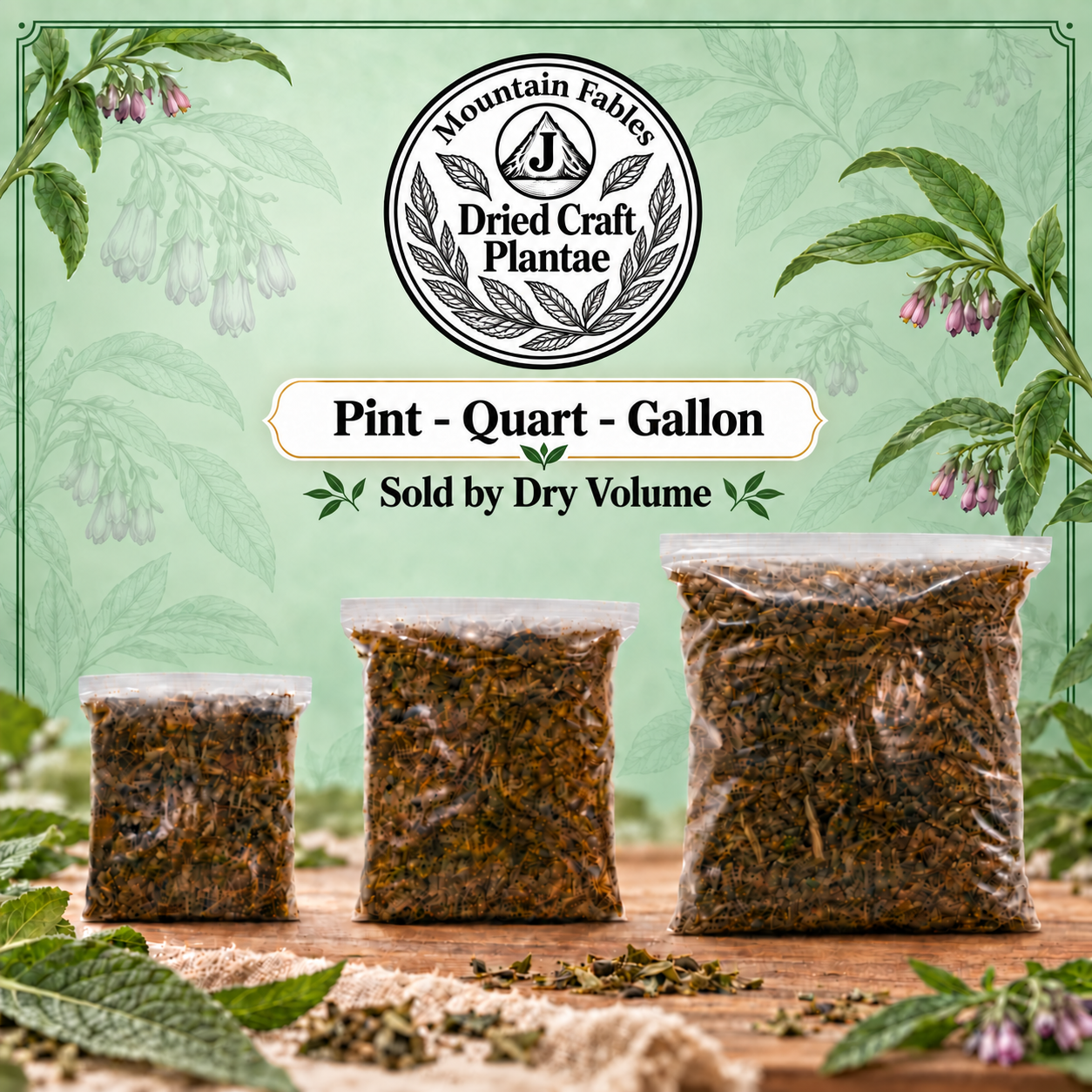
After separating, the Goldenrod is packaged in slider storage bags and sold as a bulk crafting supply. Bags are not weighed, rather, each bag is filled by volume and sold as a Dry Volume unit. Each bag is carefully hand-packed and generously filled.
Available sizes: Gallon - Quart - Pint
- Slider bags are used for your ease of use and for freshness. For long term storage split the contents and transfer to air tight jars or re-pack into several new, sturdy slider bags. By splitting the order into multiple bags or containers you can use the amount needed and cut down on oxygen exposure. This will help keeping the unused portion of Goldenrod fresh.
- Goldenrod has a long shelf life as long as it is not exposed to moisture and is placed in an area that is dark or has a minimum of light.
RAW, UNREFINED, CRAFT PLANTAE USES
Mountain Fables loves supporting the creative community by providing quality plantae at affordable prices, in quantities that accommodate both large and multiple crafting projects. Our products consist of dried, raw, unrefined Plantae and are strictly for use in general, non-ingestive craft, art and display projects.
Because do not process or market our Plantae products for any single application, we do not provide specific project instructions. Instead, we encourage you to explore the internet, where you will find many wonderful artisan forums, crafting blogs, and tutorial videos that can guide you through relevant information for the specific project you wish to create.
* Mountain Fables finished Plantae products are prepared exclusively for craft. art and display uses; they are neither processed as food nor intended for human or animal consumption.
RESTING GOLDENROD
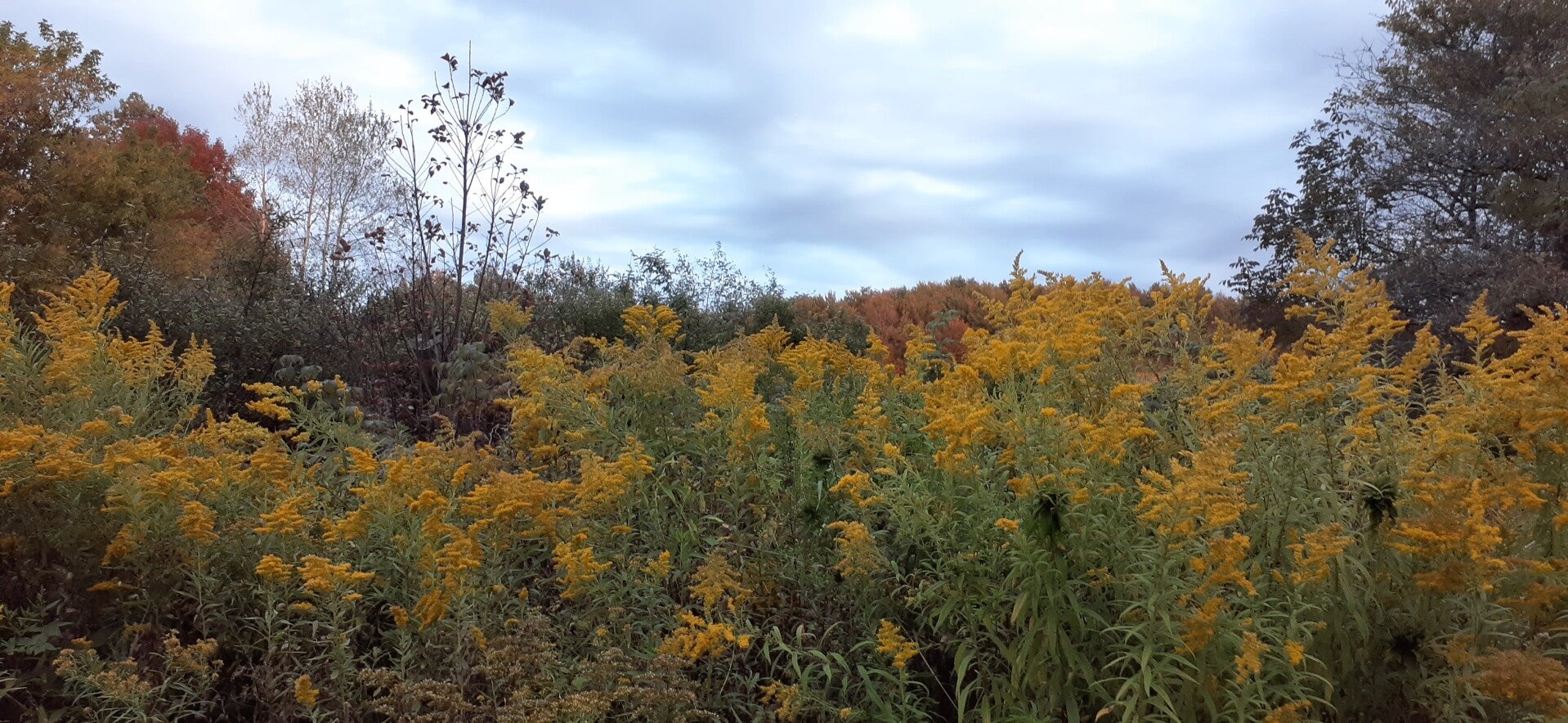
Goodbye Summer ~ Hello Fall
Goldenrod has a very short harvesting season. The buds start to show in mid to late August and mature quickly. By early to mid September the flowers are in full bloom and insects are busily taking advantage of the seasons last big bloom event.
Once the flowers reach full bloom they last a couple of weeks and then began to die back. They turn crispy and orangish- brown. As the weather gets colder, and winter approaches, the plant's rhizome root system becomes dormant.
Saying goodbye to the landscape filled with brilliant yellow foliage signals a final change of seasons. It is as if fall is being ushered in upon a beautiful sea of gold. Then once fall has made its entrance and settles in, the Goldenrod fades away - to slumber until next years spectacular golden event.
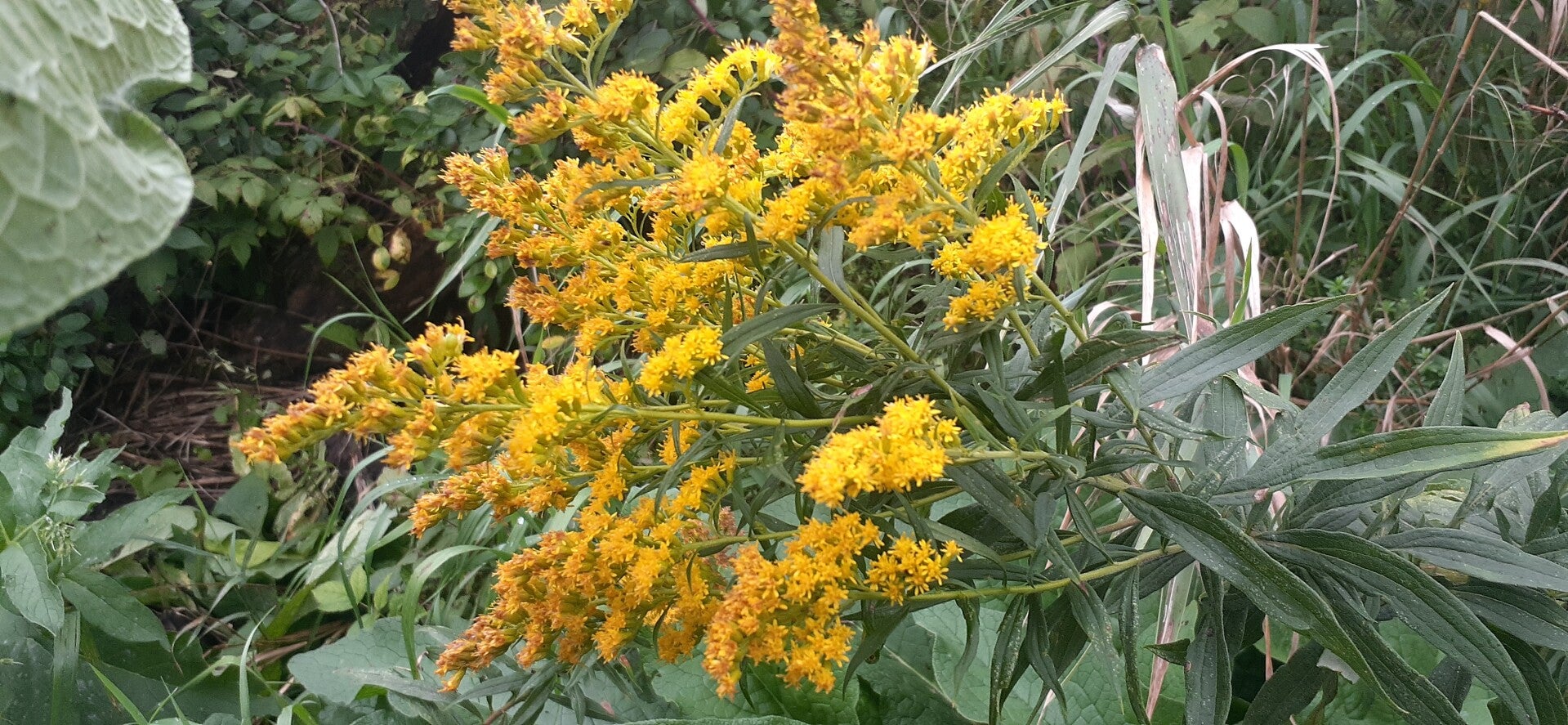
The Sea of Gold... Truly a prolific end to the season.
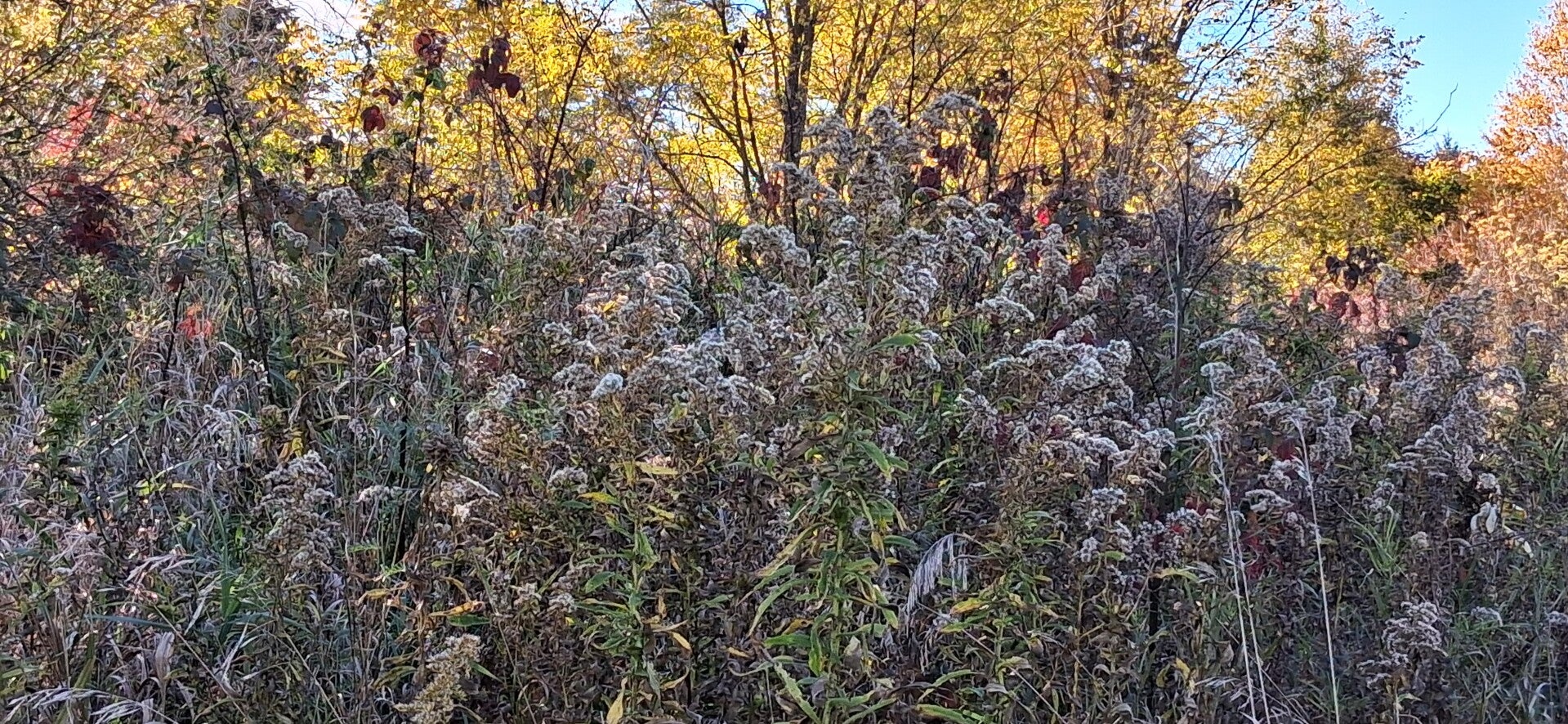

Goldenrod is a slow maturing plant. It rises from its winter slumber in late spring. Once awakened it takes its time producing the long, sturdy stems that will support the beautiful golden plumes which start to develop in mid to late summer.
Once the blooms start to appear things happen very fast. Both humans who harvest for craft and insects that harvest as a food source must act very quickly and vigorously, as the allusive golden treasure waits for no one. When the harvest period ends it is a long wait until the next, much sought after, crop of elegant golden buds appear.
When they do return, however... it is once again a joyous time for all!